The Bride in Blue


Author’s Note: This is all my original work and belongs to me, Melissa Snyder. I do not know if I will continue posting updates after this but, again, I would appreciate first impressions/comments/constructive critiques. Thank you!

= = = =

They call her blessed, fortunate, prized among women. They touch her with gentle hands, whisper prayers of blessing, and utter yips of approval. She is set above the salt; she is raised high.

She is to be a bride in blue.

Continue reading

Searching for a little balance


Quotes from chapter 2 of The Fringe Hours: Making Time for You, by Jessica N. Turner:

“When we live using our God-given talents and passions, I believe we are pleasing him and more fully living the life we were born to live.”

“In our mess, God makes us strong. In your glorious imperfection, you can still shine beautifully bright. Embrace that truth. Stop trying to be everything for everyone and start investing in who and what really matters.” (Emphasis mine)

I have always felt the need to be everything for everyone (or what everyone expects) and to be excellent at it, what’s more. Still do at times, to be perfectly honest. I am trying to better learn and practice self-care. That doesn’t mean that I don’t care about everyone. It just means I care about myself, too. I know the burnout that comes from stretching too thin or giving so much outside of me that there’s nothing left for me – time, emotion, thought, etc. I’m endeavoring to find that precious balance and this book is very encouraging this far. ^_^

Actions Living Out Words


Last night, I did something I have never done before. I gave a stranger a ride. This is not something I do. Not by myself and definitely not at midnight on a Friday. As I drove through downtown, I saw a woman at the side of the street, trying to wave down a car. As it would be, the light turned red and I had to stop. She came up to my window and asked if I could please help her. The pro/con battle that warred within me felt like it lasted for hours, though it really only a second or two. I rolled down the window and asked if she was OK. She said no, she had asthma, couldn’t get home, and couldn’t afford an ambulance. I could see that she was weary and wheezing and afraid. So I opened the door and told her to get in, sit back, and breathe deeply. Her name was *Ruth. She said that she had stopped a police officer and asked for help but that, for insurance reasons, they said they couldn’t give her a ride, but they could call her an ambulance. She said that she didn’t have eight hundred dollars for an ambulance and lived too far away from home to walk and make it. I told her that I’d take her home but she’d have to tell me how to get there. And so we started off. It wasn’t that long of a drive and she explained that she cleaned houses, starting at midnight (I’m not sure how that works), but that she had started to feel weak and wheezy. So I told her to sit back and breathe deeply and slowly as we drove. It was not my place to judge her in any way; my place was merely to help.

Cards on the table. I was scared. I was terrified. This was not something I had ever done before, but she needed help and I was the one there to offer it. I speak of kindness and helping others as best we can all the time. Now it was time to put my money where my mouth is and walk the walk. I’m not saying that I did this to prove that I am a good person. No, not by any means. This was as much a step of faith for me as a helping hand for Ruth. I prayed the entire time – for help for Ruth but also for protection and safety for me as I ventured into unknown territory. Where she took me in town, I had never been and worried about finding my way back but, thankfully, the road the roundabout put me back on after I left her place ended up being a pretty much straight shot towards my home.

As we drove, Ruth talked. She talked about her employers, being bonded to them and hopeful that they would understand why she wasn’t at work that night, not getting paid until Monday, how she had stopped for a $0.99 shot of liquor before heading to work that night, and, interspersed amongst her tellings, she kept repeating, “You are an angel.  You saved me. God will bless you, Mel.” I just told her that I was glad I was able to help. And that’s the truth.

I dropped Ruth off at what she told me was her uncle’s house and that he would take her home and then I headed off towards mine; after all it was after midnight and I would just reach home by the time I had told Ben I should be home. Very much not the end of my night I had expected but I only hope and pray that I was of some help and that Ruth got safely to her home and rest.

Lost in the Spiral


Author’s Note: Inspired by Erin Morgenstern’s The Night Circus and based on the Writers Write writing prompt: “Need advice Which fictional character would you turn to?”

I wander through the black and white spiraled paths that wind through Le Cirque du Reves, finding myself lost in thought and melancholy.

I wander through the black and white spiraled paths that wind through Le Cirque du Reves, finding myself lost in thought and melancholy.

“You look as though you could use this,” comes a voice and a small bag of chocolate drilled kettle corn is held under my nose. The warm, sweet smell seems to fill my head and clear it for a moment, replacing my anxiety with a momentary comfort.

I turn to meet a lovely face, framed by brilliant red hair. Penelope Aislin Murray, known lovingly to all in the Cirque family as “Poppet”. She smiles in that knowing way she has and bids me eat.

“And tell me what has you so twisted up?” she requests as well, beginning to lead the way along the windy circular paths between the black and white tents.

It is late, nearing dawn. One can see the telltale line of light beginning to illumine the horizon. Soon, the cirque will close for the night, the lights will dim and silence will fall.

“I…am stuck, Poppet,” I finally tell her after we have passed a tent or two, “I do not know whether to come or go, stay or venture. I know what will happen if I leave but what might not happen if I stay?” I know that I am being vague but vagueries have never stumped Poppet before and I know they will not now.

The young woman walks silently alongside me, our path curling and circling in on itself. “You are not stuck,” she tells me, “You are afraid.” She regards me with those poignant eyes and gentle mouth. “You don’t have to be afraid.”

She’s right. I am afraid. Deathly afraid. “What if–” I stammer, “What if this is all the magic there is in the world? What if there is no more?”

Poppet gives me that enigmatic, ethereal smile. “How can you think that, dear heart? When it was magic that brought you here?” she asks, her voice like the most soothing music. I noticed that when she was giving advice: her voice took on a musical quality to it. It calmed me. My heart beat more slowly and I felt less like I was going to collapse.

I noticed that when she was giving advice: her voice took on a musical quality to it. It calmed me. My heart beat more slowly and I felt less like I was going to collapse.

“Don’t be afraid,” she says, turning and taking my hand to lead me into a certain tent. Within it are jars of all shapes and sizes, filled with a myriad of different things and the labels all different. It is my favorite tent. Dreams and memories. My favorite place in the entire circus.

“There will always be magic, dear. It is around you, within you, a part of you. And you will always be a part of us and we of you, no matter where you go.” Poppet then picks up a bottle that I had never seen before. It is warm, the glass almost feels silky. The label has my name on it.

“Always.”

Mom, You Are Enough


In the Cayman Islands, where I grew up, Mother’s Day is the biggest church day of the year. Not Easter, not Christmas. Mother’s Day! Growing up, our church was standing room only on Mother’s Day. Pews were squashed full, chairs placed at the ends in the aisle, people crowded to stand at the back. If you didn’t get there early enough, you didn’t get somewhere to sit. Everyone turned out to honor Mom. The church board also chose a female member of our congregation to honor as Mother of the Year, so her family from all over the island (and sometimes from overseas) would pack in to pay tribute to her publicly. My own mother was honored one year and I was so proud of her, though I half felt sorry for her, as I know how Marmee hates a public fuss. Still, Mother’s Day was an opportunity for people to honor their mothers in the ways they felt possible and meaningful, namely being in church.

The Cayman Islands has been, historically and culturally, a strongly matriarchal society, meaning that women have often been the head of the household. In the older days, men would go to work on sailing vessels to support their families back on the islands. My own maternal grandfather worked as a galley chef on a merchant ship, gone from home for months at a time. The absence of these male family figures left mothers, grandmothers, and aunts in charge of the family. Mothers took care of the home, the children, discipline, their academic education, and their spiritual cultivation. Everyone knew everyone and every other person was family, so you didn’t get away with anything without it reaching your mother’s ears before you even knew someone had seen you misbehave.

Mothers have been the cornerstone of Cayman Islands’ society and culture for generations and remain so even now. Grandmothers and great-grandmothers have been the keepers of the old arts and skills such as brush broom making and thatch rope plaiting. Great-grandmothers still sweep their sand gardens and woe be unto you if you step in that sand after it’s been swept clean and neat. Grandmothers’ recipes are passed down to mothers and daughters and granddaughters, filling comfort food for Sundays, homecomings, celebrations, or days when it is sorely needed and, somehow, that fact is just known. These are the treasures still passed on from mother to daughter and they are precious indeed.

When I was a teenager, my high school teacher did a month’s devotions on the book of Proverbs. We went through a chapter a day and, in that month, I discovered a lasting love for this Old Testament book. I also found a profound respect for and desire to be a Proverbs 31 woman. In my mind, the women I grew up with in the Cayman Islands – my mother and grandmother primarily – have always personified the Proverbs 31 woman: the woman who did it all. The woman who did everything, who was everything (wife, mother, breadwinner, counselor, coach, spiritual rock, etc.), and who balanced everything. I am NOT an “everything” woman. I know and acknowledge that I cannot do everything. The truth is, neither could they nor did they. I came to realize that they did everything they could but they still needed help. So, I thought, what hope did I have of becoming a Proverbs 31 woman, the ultimate Godly design? Even now, at 32 years old and having become a mother myself, I still periodically have that thought. I am not a Pinterest mother who makes meals fit for recipe books or cute snacks or crafts worthy of going viral on Instagram or Twitter. Nope, that’s not me.

Then, the other day, Proverbs 31 Ministries (I know, ironic, right?), their Facebook page posted this quote from speaker Tony Evans: “The Proverbs 31 woman is not the model of a perfect woman. She is the model of a committed woman under God.” The Proverbs 31 mother is not the perfect mother; she is a mother committed under God to the welfare and care of her children, committed to loving them unconditionally. The Proverbs 31 wife is not the perfect woman in pearls and high heels with an immaculate house. She is the wife who faithfully prays over her husband, is his partner, listens to his frustrations, and shares in his triumphs and sorrows, and shares her own with him in turn. The Proverbs 31 teacher is not the perfect teacher; she is the teacher committed under God to the education and healthy social and emotional development of her students. The Proverbs 31 woman is not the perfect woman. Let me say that again: she is NOT the perfect woman. You do not have to be the perfect woman or girl. I do not have to be the perfect woman. What makes us the women and girls that God created us to be is our commitment to Him and His word, our lives lived according to His commandments. God has called us to love Him with all we have and to love others. These are our two most important commandments, above everything else. He has also given us each specific gifts with which to show that love, to our family and to others. Whether that gift is cooking, driving, writing letters, playing music, helping with homework, keeping everything organized and tidy, or whatever else, we are all women who can be used of God if we will commit ourselves and our lives to Him.

Mothers, we are here to guide our children, love and support our significant others, and buoy up those in our lives. Is it easy? No, not easy. Hardly ever easy. But little that is good and worthwhile in this life ever is. We honor you this weekend, Mothers, and we thank God for you. You are enough. Just as you are. For God, and definitely for us. Happy Mother’s Day!

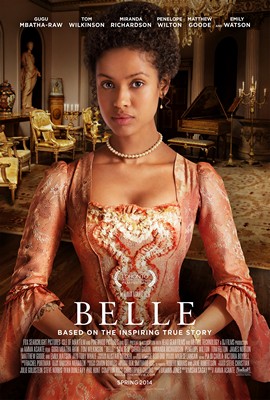
Film Review: “Belle”


This is my latest article published by the wonderful ladies at The Well Written Woman:

I have long awaited this film. When the movie opened in 2013, it was showing nowhere near where I lived except in a small art-house theater, which I didn’t realize until after it had already closed. My wonderful husband bought it for me for Christmas, however, and I am only now getting around to watching it. Belle is inspired by the 1779 painting of a young mixed-race woman seated with her cousin, identified as the Lady Elizabeth Murray. It is brilliantly cast, sumptuously costumed, and emotionally charged.

Belle_posterDido Elizabeth Belle Lindsay was born of a nobleman and a slave of whom little is known. The story this film tells is that of Dido as she and her cousin begin the fraught journey into society and marriage and finding their place in the world. For Dido, it is compounded by her uncle/adoptive father’s soon-coming decision in the case of the Zong massacre, which, as passionate young lawyer-to-be Mr. Davinier asserts, could pave the way for a very change in law regarding slavery and its abolition.

Something that struck me deeply was a scene at an early segment of the film, after Dido has learned of a public (and highly publicized) case before the Supreme Court in which the captain of a ship, the Zong, is trying to gain payment from his insurers for a cargo of slaves whom he threw overboard. Dido sits before her toilette table, looking at herself in the mirrors, crying, she begins to rub and scratch at her skin as if she might rub away her mocha color.

As a black woman myself, I have never found myself to be in a position of crying over my skin. I admit, as a child, I wished for fair skin and blonde hair, to be considered beautiful by boys, yes, but also in general, outside of the familial good opinion of my parents. But I have never felt so disregarded, so disdained for naught more than my coloring that I have ever actually wept over being who I am. To picture myself in such a position seems beyond the realm of even my imagination. For the record, though, that particular instance is the only memory I have of feeling that particular inferiority.

Dido’s reaction strikes me as nothing short of realistic, however, having grown up with her family to whom her color meant nothing personally but who, when faced with the society of which they were a part, were still bound by the classist and racist mores and rules that kept her a veritable secret and then an object of amusement and scorn.

Dido faces a gauntlet on many sides, venom, fascination, and sideshow curiosity layered beneath social politesse, but no less obvious to all who witness it. She states at one point to Mr. Davinier that she is struck by the thought that she is free twice over – free from slavery and free from poverty, having inherited her father’s fortune upon his death. She is a woman of independent means and, therefore, most would say, given the freedom to marry where she pleases. Even so, Dido struggles to find the freedom to just be – to be herself and all that means without apology and to accept herself without shame. And so Dido searches and fights and argues for justice as her father prepares to render his decision in the Zong case.

I was pleased with the fire that Gugu Mbatha-Raw brought to the character of Dido, a young woman raised with all the knowledge, propriety, and breeding of her rank and determined to live the life she deserved regardless of how others might regard her for the color of her skin. The cast is all talent as she is joined by Tom Wilkinson, Miranda Richardson, Penelope Wilton, Sam Reid, Matthew Goode, Tom Felton, and Emily Watson. This film is an enjoyable period piece with strong undertones of social consciousness and justice and stood as an excellent precursor to the next film on my docket: 12 Years a Slave.

Postscript: There is more information about the true story to be found here: http://www.telegraph.co.uk/culture/film/10863078/Dido-Belle-Britains-first-black-aristocrat.html

Flash Fiction, Part 2: The Bride in Blue (Beneath the Veil)


They call her blessed, fortunate, prized among women. All she knows is that, today, her fate will be forever decided for her. She will have no long-born legacy as a bride in blue. She will have no children. She will have no husband. She may even be virginal forever. With a few words, a blue price, and the intoning of a godsman, her destiny will be obliterated, swallowed up in others’ desires for prestige.

They breathe prayers of blessing and utter yips of approval as they drape the sapphire blue veil, embroidered with golden gods notes, over her head, and paint her mouth red, the color of cunning.

She lets them dress her, veil her, bless her. She lets them lead her to the fane, all without a word. Nothing for their blessings, nothing for her mother’s tears, nothing for her sister’s jealous glances, nothing for her fathers puffed-out pride. If she could slap his hand away, she would. But she cannot, not here, or risk the standing of her family, little as it might be on its face. So, silent as a grave, she lets him lead her into the fane, through a world blurred blue and gold, to the fate that awaits her.

Flash Fiction: The Bride in Blue


They call her blessed, fortunate, prized among women. They touch her with gentle hands, whisper prayers of blessing, and utter yips of approval. She is set above the salt; she is raised high. She is to be a bride in blue.

She is to be a bride in blue.

A bride in blue is special, set apart, set above. She might not be the first wife, the last wife, or even officially a wife. A bride in blue is something completely different. She is not the lady of the family or the head of the household. She could bear children but, often, precautions were taken to prevent the marring of her form. If she does, they will be placed in the nursery and taken to breast and mother by another, that blessed name never reserved for her. She was the height of the social court. When her lord or duke, warden or councillor will give great feasts or celebrations, bedecked and glittering for their distinguished guests, it is his blue bride who will appear at his side, the shining star on his arm. She will reign supreme, the celestial gem seated enthroned in his court for that night. She is the one about whom the minstrels will sing, the poets will write, and to whom men will swear chivalric fealty and their bravery’s blood.

They call her blessed, fortunate, prized among women. They touch her with gentle hands, whisper prayers of blessing, and utter yips of approval as they brush her locks until they gleam, paint her lips an ember red, and drape the sapphire gossamer over her head. Today, she will be a bride. She will be no wife. She will be no mother. Forever, she will be a bride in blue.

= = = =

This piece was inspired by my daughter running around, my dancing veil of filmy blue sari chiffon draped over her head. I’d really like feedback on this one. Please, feel free to leave me your thoughts in the comments. ^_^

Beautiful Bellies


This past Sunday, I performed with my belly dance class at the end-of-semester recital for the arts center where our class and others were held. As I watched the other belly dance classes perform their pieces, an idea struck me. I love the bellies that I see in this community of dance. Almost every woman and girl there Sunday bared her belly, proud in her beauty and grace, as she danced, and I found myself observing them as well as enjoying their performances. And I found that I love those bellies.

There are bellies that have borne children, still bearing the marks of that great effort, and have perhaps gone with less or even without so a child’s belly would not.

There are bellies that have seen decades of life, work, changes, and love.

There are bellies still soft with baby fat, barely in their first act of life.

There are bellies slender with vivacity and activity. Bellies strong and muscular with hard work and determination. Bellies voluptuous and curvy. Bellies dimpled and scarred with evidence and proof of life.

There are bellies of all shapes, sizes, and colors, and each and every single one is beautiful, graceful, lovely, and powerful.

It is the magnificence of each woman that makes up the beauty of the dance.

Yallah!

Why I Walk Around Naked


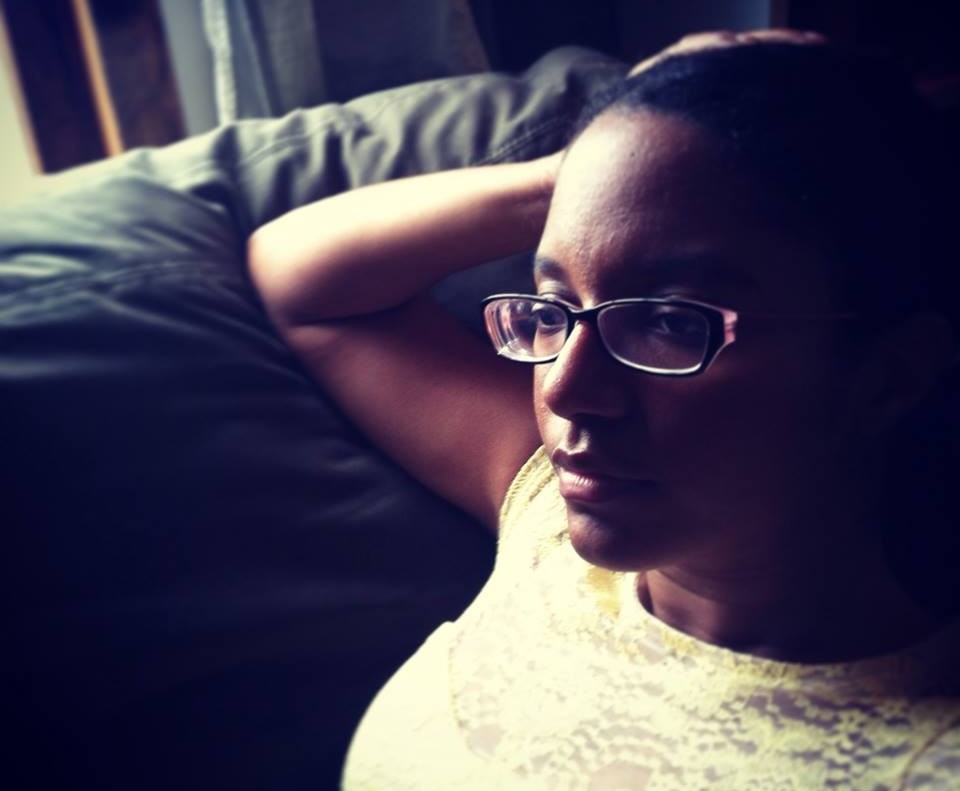
11150479_630544590414714_184724744336153178_nI frequently walk around the house naked. I know. Big deal, right? Well, for me, it has become quite a big deal. First things first, though: cards on the table. I am 32 years old, a wife of almost a decade, and the mother of a rambunctious two-year-old girl (remember her, she’s the lynchpin here). I am 5’1 and my weight is currently hovering at 135 lbs. Is my body perfect? No. It’s why I work out at home just about every day, try to eat better than I have in the past, and hit Planet Fitness with a friend a few times a week to run and strength train on the weight machines. No, my body isn’t perfect, but it’s healthy and getting stronger as I continue to work. More importantly than even that, I have a daughter to whom I want to teach a positive body image and comfort, as well as healthy habits. I want my girl to grow up at ease with herself, to find her body strong and capable, to find herself beautiful. Who will she learn that from but me? Whose voice will battle all the others that will bombard her from society, television, movies, toys, etc.? Mine. Mine is the voice she hears all day. Mine is the body she sees working, playing, exercising. Mine are the reactions and self-talk she will learn from. Therefore, accepting, working on, and speaking kindly to myself are not only for me for but for my Elizabeth as well.

Not too long ago, I watched a video from my belly dance class that my teacher had posted in the class’s Facebook group. We were drilling portions of choreography and my posture was wrong, terrible even. And I told my husband:

“I hate the way I look in this video! I look like I’m still pregnant!”

I immediately regretted and kicked myself for the unkind statement, as Elizabeth was sitting nearby playing with her toys. I maintain that, though she’s only two, she understands everything that is said to and around her. So I have to check the negative self-talk, both inner and outer. If I want my daughter to learn to accept herself, love herself, and see the beauty in every curve, line, and angle of her unique body, I have to do the same. She won’t learn or develop a sense of body comfort if she hears me constantly bad-mouthing my own body. My unique, maddening, triumphant body.

So I walk around the house naked, and I let Elizabeth run around in her diaper, especially now that the weather is warm again. Together, we work on her learning that everyone has a body beneath their clothes and that it is nothing to be feared but everything to be respected and appreciated. At the same time, I am working on my own comfort level with being naked around her and explaining the differences between my body and hers, even at her young age.

“Yes, those are Mommy’s breasts; some mommies feed their babies that way. Yes, you have nipples, too.”

We teach our children to name the parts of their faces, their arms, legs, fingers, toes, and tummy as a necessary benchmark of their development, but I think that it is also important for children to see, from their parents, what those bodies will look like as they grow. I want to be comfortable enough with my daughter and her with me that she can ask me questions about my body and her own as she grows older. I want her to see her body as beautiful, no matter what the voices around her might say. She is strong and brilliant, energetic and curious. I want her mind and body to exist and work together, not against each other.

When I was a girl, I marveled at my mother’s waist. She had a stunning curve to her waist that her A-line dresses gorgeously accentuated. I would trace my hands over her silhouette and hope to be as lovely as her when I grew. When she’d let her hair down, I would hold its weight in my hands and stand in awe. I saw my mother’s beauty, even when she couldn’t, but I struggled for a long time to find my own. I would dearly love to protect my daughter from that uncertainty and for her to always be assured of her unique loveliness and brilliance. Even better if she will then, in turn, remind others of their own.

So I stand naked before the mirror, deny the negative self-talk, and call myself beautiful. My little girl comes to stand beside me, as tall as my thigh, and leans smiling against my leg. I hug her close and call her beautiful, and, somewhere in that little child brain full of all things new and amazing, I think that she thinks so, too.
5d58759b112bbaf3c8fd77adba7cb809