Striking to Think


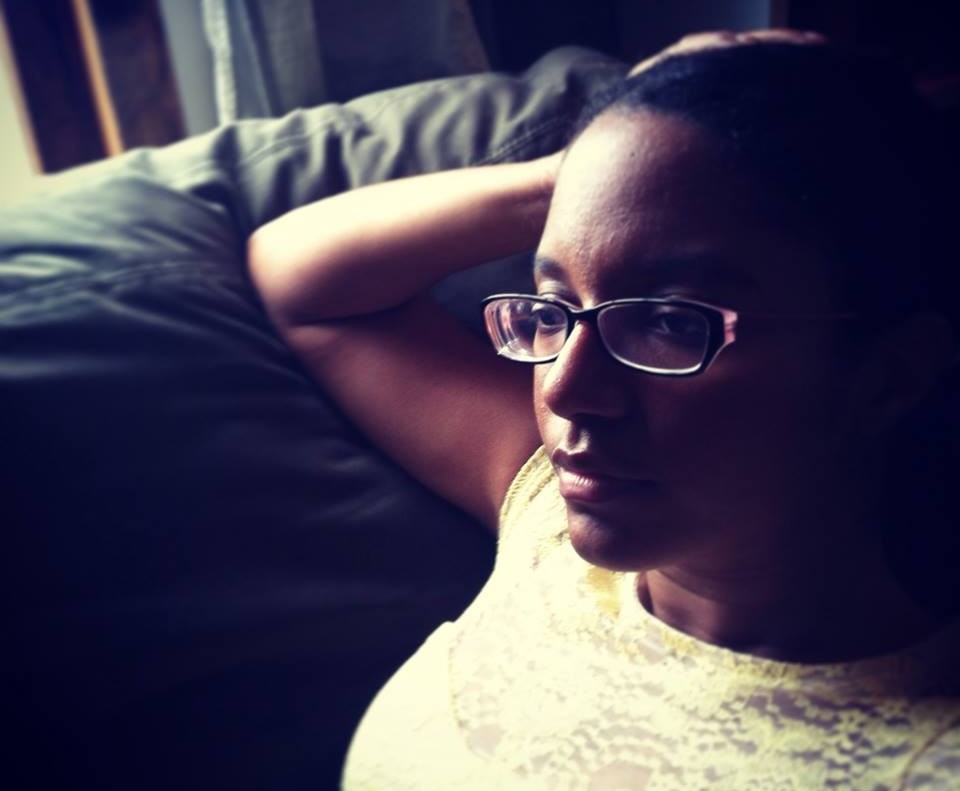
I caught sight of myself in the mirror as I finished my shower last night and was rather struck by my reflection. My cheeks were rosy, lips pink, eyes dark and long-lashed, and my ponytail in a curling coil over my shoulder. It was one of those moments that it felt like seeing myself for the first time and not recognizing who was looking back at me. Even odder and more striking to me was to catch myself thinking, “Beautiful!”  Let me say that for you again. In that moment, I thought myself to be beautiful. Part of me sorely wished to take a picture but I realized that no camera was ever going to catch the way I saw myself in that moment. Yesterday, I spent most of the day catching up on “The Borgias” so I was looking at Holliday Granger all day, undoubtedly one of the most beautiful young women I have ever seen. So, to consider myself as beautiful and graceful as “Lucrezia Borgia” herself for a moment was a pretty big deal to me. When I finished and came out into the living room, I gave my husband quite a kiss, one that made him asked, “Are you…trying to tell me something?”

I smiled and replied, “Just that…I feel beautiful right now.”

Breathing Prayer


I have found myself praying often lately, especially when my mind begins to turn tumultuous – dwelling and worrying and the like – or even when it is quiet. I find my self pouring out in prayer. Prayers for myself, for others, over the situations in my life that need guidance or an answer. It’s really me talking to God, and it feels natural, which always amazes me. I was raised in the conservative Christian church; prayer is far from a foreign concept to me. Still, to find prayer – thanks, intercession, honesty about fears and needs, rejoicing, etc. – flowing from my mind, mouth, and pen as naturally as breathing never fails to amaze me. I have found myself lying in bed unable to sleep, my mind racing with worries and fears, and I start talking to God, pouring those worries into his figurative lap. I tell him what I need, where I am lost and need guidance. Am I to go back to work to allow Ben more time for ministry? Am I to resume teaching or strike out into something new and unknown? What would I do with Elizabeth? Where do I put my foot next? What am I to say or do for this friend who is hurting or in difficulty? How am I to be a good friend to them and not simply make empty statements? What do I need to do, or be doing, to be a good wife to Ben? I bring all of these questions in prayer, but I also bring my joys. I’m thankful that Elizabeth is as healthy as she is. I am thankful for our home and the new opportunities in our lives. I am thankful to have met Ben and I am blessed to be his wife. I am thankful to be able to be with my daughter and to blog and write more.

Writing is my preferred method of communication at least 70% of the time, honestly. I write down many of my prayers, but to have prayer flowing easily through my thoughts or my voice, true heartfelt prayers, is a big deal to me, One of the admonitions in the New Testament of the Bible is to prayer unceasingly. I will freely admit that there have been long periods when I have gone without talking to God, that’s what prayer is, after all, and those have been times of worry, fear, and a distinct lack of peace. Praying is not easy when life is hard I do but I trust that they will be. I have faith and that’s really all I can do. Have faith, prayer for myself and others, and follow that leading when I feel it linger in my heart and soul.

Prayer, faith, belief – maybe none of makes sense to you or may apply to your life. That’s all right. It does to me.

Defending My Peace


Originally posted on The Well Written Woman, “Defending My Peace”.

Let it go, let it go
I am one with the wind and sky
Let it go, let it go
You’ll never see me cry

Here I stand
And here I’ll stay
Let the storm rage on  – “Let It Go”, Disney’s Frozen

Lately, I have been surrounded by situations that provoke my helplessness. Even more so than my helplessness, though, they provoke my desire to take care of things, to help, to fix things, make everything okay. I have thought, I have written, I have prayed, and I have indeed found guidance and followed it as best I can. So everything is supposed to be good, right? Everything is supposed to fall into place, isn’t it? Yeah, not so much.

I feel like a storm, a maelstrom, is roaring around me, and, every time I think it has abated somewhat, that I have made progress or taken a step forward, it blows up in my face again, roaring and bashing against my heart and mind. I take step after step forward, trying to do what I feel convicted about, what I feel God has laid on my heart and led me to do, what’s important and right. When I follow through, it brings me peace. But then, as I try to walk forward, I feel like my feet sink into the snow, into the mud, and the cold. My peace is threatened. I war against my own mind, my own tendency to doubt myself, to doubt my worth, my actions. But that peace glows and warms me like a coal, a feeling that is often so fleeting in our lives these days. I don’t want to lose that, so I have resolved to defend my peace, to fight for it. And that involves something that is very difficult for me, something that is hard to admit and even harder for me to say to myself.

My peace does not depend on others. My peace depends on me doing what my heart has been convicted is right, what I need to do, and resting in that and in God. My peace is on me, not them. While it may be true, it is something that takes me reminding myself every day, moment by moment, prayer by prayer. But those prayers are not just for me; they are also for those in my life, those in these situations. Prayers for peace for them as well in whatever capacity in which they need it.

There are days, the not-so-great days, when my peace is threatened by things inside and outside of these situations, but I will continue to fight and defend and hold on to my peace. It’s a constant work. Worries threaten, as they always have, but I am working on weighing them out. The things that I can control, I will do the best I can with them. The things I cannot control, I have to just let them go because they are not mine to deal with. And it’s hard to let go; specifically, to let go of my desire to fix the things around me and make everything hunky-dory. I can’t do that. It’s not my place nor my job to fix everything. I can deal with things in my own life, in my sphere, but I recognize that my emotional and mental tendency is such that I want to fix everything for others, too. Family, friends, the people who I care about in my life. Admitting that I can’t, that sometimes I am helpless to affect such a change or a fix, is hard. But, if I constantly worry and fear and flail, all I will do is cause myself pain and guilt over something that I realistically had no control over in the first place. Control, true control, over our lives may be an illusion, as some have suggested, but that doesn’t stop me from trying to grasp at it, to not feel quite so helpless in it all. Endeavoring for balance is where I find myself at one point or another in my life. “Let go and let God” is the saying that comes immediately to mind, and that is where I am right now, as I sit in the dark of my quiet house writing this while everyone else is asleep.

I find myself praying more and more lately, when my mind turns towards the maelstrom, when it threatens to drown me again and I feel helpless. That helplessness swells up so strong and hits without warning. I don’t know whether I’m coming or going or standing on my head or my feet, where to turn or what to do. It’s why I follow my gut, that voice within, when I feel led by God to do something, when I feel that sense of direction in my heart and my soul. I follow it because, in that moment, the next place to put my foot is clear to me. Maybe just that next step and only that next step, but it’s there. When I feel that it is the right thing for me to do, it’s not a sense of control necessarily, it’s a sense of “yes, this is right” and that’s where I try to step. It might not make sense to anyone other than me but I believe that it is God’s metaphoric thumb in my back, which I cannot ignore, or, at least, I try not to. When I follow through on that leading, the peace that comes with it more than amazes me in its comfort. I don’t want to lose that.

So, to echo Elsa, here I stand, and here I’ll stay. Let the storm rage on! The cold may bother me but I won’t let it beat me. I won’t let it, let my peace, go.
Review: Everything I Need to Know, I Learned from a Little Golden Book


Yesterday, my husband showed up home from work and held this book out to me (along with a gorgeous new notepad and gel pen, the man really knows how to get to me). “For you,” he said, “I figured you’d chewed on enough of them in your childhood, so you’d appreciate it. And he’s right. When I was a child, I had dozens of Little Golden Books, both with the golden and the silver spines and I loved them for the mere fact that they were books. But I also liked them for another reason. I thought the spines were delicious. I would sit and chew on the spines of those books and just think. It’s like how some adults chew on pens or pencils in the midst of thought, that’s what I did as a kid. And it remains a joke within my family, especially now that I have a fourteen-month-old daughter who adores chewing on books herself.

However, this book really touched my heart. Full of advice and adages for a “golden” life, it pulls its wisdom from some of its most popular and beloved books, such as The Saggy Baggy Elephant, Baby Listens, Tootles, and The Pokey Little Puppy. As I sat on my couch and read through it, I smiled with every page, not only at the familiar illustrations but also at the simple but very encouraging advice. If you are looking for a keepsake book to just make you smile, this is a wonderful choice! 🙂

Connection


realwoman's avatarREAL WOMAN BLOG

“We know that every connection matters. Every connection is crucial and when one is broken, it usually means that the damage has been done. This system of connection compels us to act, choose and behave… sometimes seemingly against our own will, but it is not random at all. It is the map of who we are. We will work to understand ourselves… solve the puzzle of how all the connections work and how all the pieces fit.”

cj

View original post

The Fallacy of “I Don’t Care”


“I don’t care.”

It’s an expression of apathy, a defense against responsibility, against hurt, against the unknown. We learn it as children, as a layer of armor against something we don’t want to do or say or deal with. “You’ll lose your playing time.” “I don’t care.”

“I don’t care” is a lie. We say it to convince others when the person we are trying to convince is ourselves. It’s a lie, words that need not be said if they are true. I say it because it isn’t true. I say it because I do care. I say it because my heart is breaking. I say it because I don’t want to cry. I say it because I’m angry. I say it because I am trying to be brave. I say it because I think I’m supposed to.  I say it because I don’t know how to feel. I say it because I’m helpless to do anything else but say it.

But it’s a lie. I do care. Madame Vastra’s statement is probably apropos here: “Truth is singular, lies are words, words, words.”

Resurrecting Dead Poets


I am not a huge fan of Walt Whitman but, now that Robin Williams’ quoting of his poem “O Me! O Life!” from Dead Poets Society is the background for Apple’s new iPad commercial, that poem has once again become imprinted on the front of my brain.

O Me! O Life!
BY WALT WHITMAN
Oh me! Oh life! of the questions of these recurring,
Of the endless trains of the faithless, of cities fill’d with the foolish,
Of myself forever reproaching myself, (for who more foolish than I, and who more faithless?)
Of eyes that vainly crave the light, of the objects mean, of the struggle ever renew’d,
Of the poor results of all, of the plodding and sordid crowds I see around me,
Of the empty and useless years of the rest, with the rest me intertwined,
The question, O me! so sad, recurring—What good amid these, O me, O life?

                                                                     Answer.
That you are here—that life exists and identity,
That the powerful play goes on, and you may contribute a verse.

I, as a human being, cannot help but ask myself sometimes, what good am I? And the honest truth to that is: I don’t know. I don’t know what good I am, what grand purpose I have in the scheme of life, what – if any – legacy I will leave after me. All I know is that I am here and whatever verse I am contributing, I am trying to make it a good one, a sound one, one that will encourage and edify. I don’t really know what I am doing but I’m trying my best to do it well.

Arsenic Candy (complete)


Author’s Note: This is quite the departure from any sort of story I’ve ever written, I think. But I enjoy its bite. I finally figured out how to finish this quick-write (only took me four years to do so). Enjoy.

= = =

“I taste arsenic on the back of my throat. Are you trying to kill me again?”

I slowly, gently nudged the brown-glass bottle to the back of the open cabinet in front of my chair with the toe of my shoe. “No,” I said, not moving from my microscope, though I knew my voice carried a bit of five-year-old pout. The sort of pout that you get when something doesn’t go your way but you can’t admit it.

Of course I had been trying to kill him. I had been trying to kill him for years. But it seemed that he had developed a tolerance for rat poison after all the dollops in his morning coffee. Oh, well. Scratch experiment #275 for a failure. Back to the drawing board, I supposed, literally and figuratively.

He just shook his head and looked at me in that contemptuous, pitying way. “You’d do better with ricin,” he commented rather sagely and shuffled over to his lab table.

Who was he to pity me and, moreover, give me advice on how to kill him? It was his fault I was still stuck here, amongst these fumes and biologicals all day long. If he’d simply approve my thesis, I could move on and be done with it. But no.

“I have determined,” as he loved to say, “that your thesis lacks depth, structure, and you need more time to perfect your method of experimentation.”

More tests, more experiments, more data. Evermore data. It had been seven long years, my financial aid was just about dry, the university was dead set on being rid of me, and here was the old geezer pissing time away because he was a lonely, old, sadistic prick.

The place smelled like mothballs and formaldehyde and it clung to me when I left. Even showering with hot water and lemons didn’t get rid of it. That was no way to pick up a girl in a bar or club: smelling like a convalescent home. Once, a girl told me that being with me was like sleeping in a coffin or a morgue. Yeah, that relationship went well, meaning it was blessedly brief and long ago.

I hadn’t had sex in three years. Three damned years with nothing but my own hand for company! Even the macabre girl was good for a roll at least.

So, yes, I was trying to kill him, had been for years. But the old dotard just wouldn’t keel over and die. It was like he had made a deal with the afterlife to be my personal torment here on earth just so long as he could keep living, keeping me from my goals, from even the barest acknowledgement of the scientific community. Because of a foul ordinance of the university that required doctoral candidates to have the signed approval of their supervisor on any article they wished to publish, my professional dossier was empty. Old Crab wouldn’t sign off any even the merest observational report that was intended to leave his lab.

Yes, Old Crab. And he looked the part, too. His eyes were beady and black and glittered in the lights of the old-fashioned Bunsen burners that he insisted on using, scoffing at modern heating plates. His hands were gnarled and he had arthritis so badly that his fingers sort of clamped together most of the time so that he looked to have two claws instead of ten fingers. When he flew into a rage, he turned a bright orangey red. Not even a pinky red like most humans. His skin was so sallow that the red fused into an almost carrotish color when the blood rushed to his face and neck.

I hated this man, hated him with all my gut and being. I was ready, I was done. I wanted to be free. But I was so invested, so in debt, that I couldn’t afford to just walk away. I had to graduate, I had to have at least something to show for my years of servitude. I was so busy stewing in my utter rancor and hatred that I didn’t realize that it had fallen quiet in the lab. It was never quiet. Old Crab was always clanking things together and dropping stirrers and such. So quiet was a curiosity. A curiosity that made me turn around.

And I couldn’t help it. I laughed. I laughed and laughed and laughed until I cried. And then I picked up the phone.

They said he died of heart failure due to old age and an extremely carcinogenic habit of particular cigarettes (Weren’t those things banned years ago? He must have eaten them like candy).

Me? All I could think of was the sight of him on the floor, arms and legs splayed out in like a crab that’s been flipped onto its back and stomped on.

Is this what they would call a frabjous day?

Stranger in the Mirror


My most recent article published by The Well Written Woman:

“My aging was very sudden. I saw it spread over my features one by one, changing the relationship between them, making the eyes larger, the expression sadder, the mouth more final, leaving great creases in the forehead. But instead of being dismayed I watched this process with the same sort of interest I might have taken in the reading of a book.” – Marguerite Duras, The Lover

I have a few friends who have sometimes exclaimed to me that I haven’t changed my looks since I was seventeen. Heavens above, but I hope I have. And I think I have, too. Looking at myself in the mirror, I often have to push past the tendency to see myself at seventeen, the first major changing point in my life: when I went off to college. That image of me has stuck rather stubbornly over the past fourteen years. But, if I can look past it, I can study my reflection for quite a long time and find subtle differences.

I think back over the critical points of my life and how my body – my physical form – has changed and transformed with them. I gained eight pounds my freshman year of college and no one at home had the heart to tell me until I wore my favorite dress to my friends’ high school graduation. Afterward, I was told by a young man that I had known from my church’s youth group that I shouldn’t have worn it, that I “looked fat”. I don’t think I ever wore that dress again, nor spoke to him beyond what was polite.  That dress, formerly beloved and the very same one that, only a year or two prior, I had been proclaimed “beautiful” in by another young man (can’t tell you how many times I read that email), the poor thing faded away into obscurity in my closet. Don’t know what happened to it to this day. What can I say? Words have power and the social movement for self-love in young women was at least another decade off.

In my first semester of graduate school, with the stress and a myriad of changes in my life, I lost almost twenty pounds in quick succession, my rapid weight loss finally slowing to pause around ninety-seven or ninety-eight pounds. It was corrected with a visit to the doctor, some meds, and conscious efforts to relax a bit more the following semester. However, that didn’t stop the comments of “You look great! You lost so much weight!” when I went home for the holidays. Unfortunately, they weren’t as much of a compliment as those giving them probably intended for them to be, as I knew that I was currently unhealthy. But, eventually, I found a happy and healthy place again.

I am a late bloomer as far as my looks and physique go, at least in my opinion. My skin has never been perfect but I can keep it fairly under control. My body never really settled into its shape until after I got married. As I entered my thirties last year, I found that I began to notice a more mature look to my eyes, the curve of my cheeks, and the turn of my mouth. If I tilt my head, I find the line of my jaw. I trace it with my fingers and find it still strong, still defined but without all the softness of my youth. A softness is still there but of a different sort, borne of a deeper understanding of love and life. Sometimes I hardly recognize myself. I see a new depth of experience in my eyes and wonder, “Where did that come from?” Smiles and laughter have begun to imprint themselves in the corners of my mouth, moments that I cherish and am thankful for hiding there along with Mrs. Darling’s kiss. I read, with my fingers, the slope of my neck into my shoulder and find it strong from burdens borne. The way I hold my hands is permanently influenced by my years in belly dance. I’ve lost a bit of my curve since having my daughter, my waist coming out to meet my hips a bit more. There’s more of a fullness here, a roundness there. A scar where there was none before. The landscape of my body has changed over the past fourteen years, and that’s all right.

I am finding that I am growing happier and happier with myself. I have managed to lose most of the baby weight after fourteen months and I am getting back into toning again, little by little. But, most of all, I am learning to appreciate myself for just that: myself. That is hard work in and of itself, an exercise of the mental and the emotional as well as the physical. I cannot pretend to tell you how it’s done; I don’t have a secret, I don’t have an answer. Just a fortunate turn in years of difficulty with self-esteem and body image. It catches me by surprise sometimes, me looking at myself and smiling. When did I become so chummy with myself? I don’t really know, but I like it.