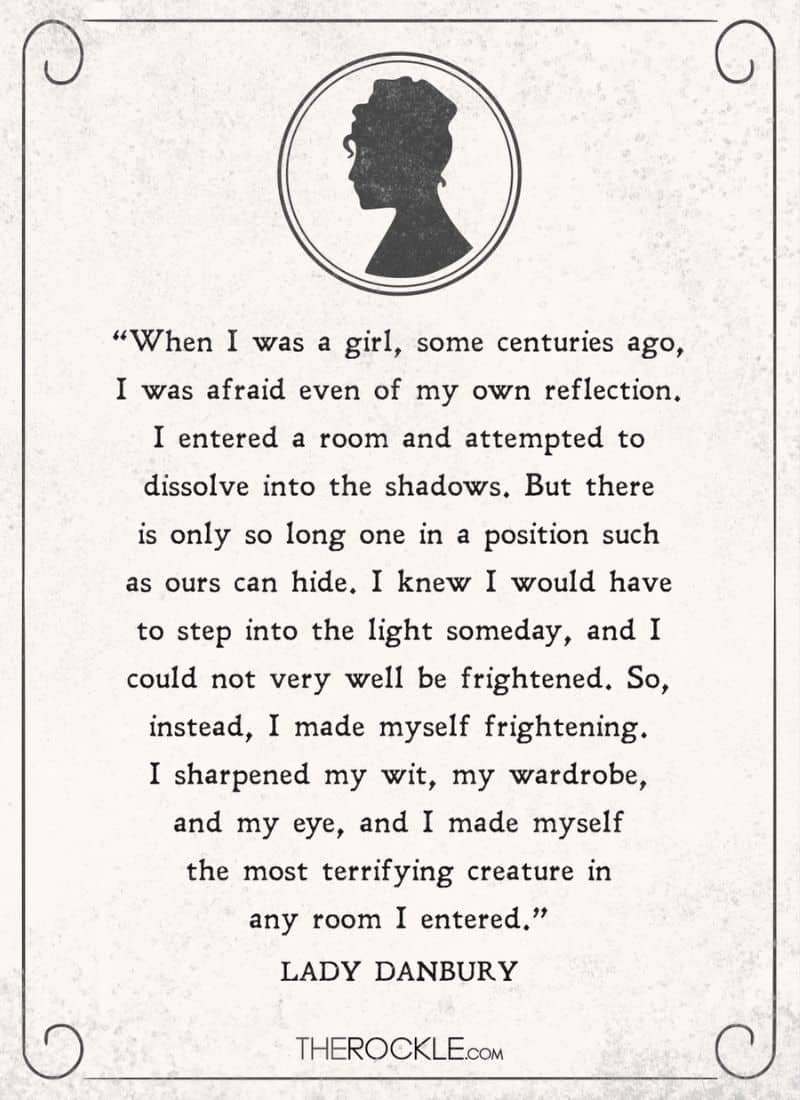
In My Lady Danbury Era


Yesterday, on my Instagram, I posted one of my favorite cos-bound outfits from this year: Lady Danbury from Bridgerton in one of my favorite color palettes of peony pink and plum. I noticed, with some measure of joy, that my silver streak at the front of my hair is becoming even more noticeable, too, which one thing that I adore about Lady Danbury’s style. In the caption for my post, I noted that I am still very much in my Bridgerton/Lady Danbury era and that has stuck with me over the last 24 hours. The way I described Lady Danbury was classy, smart, sharp, and heart for days. She is undoubtedly my favorite character in the Bridgerton series and that may easily be attributed to my own “advancing age”. As I have entered my forties, I have been finding myself less and less concerned with outside forces, as it were.

I want to look and feel good, but I care less about how my body and personal style stack up against social beauty standards.

I want to be respected, but I care less about pleasing people just so they will like me, even my students.

I want to be around people who feel like home to me, so I care less about being seen as “antisocial” because I get to pick with whom I expend my energy.

I want to live my life in a way that is true to my faith, and I don’t care if my love for and welcoming of others make people uncomfortable. (I mean, when was the establishment ever comfortable with Jesus, after all?)

The older I get the more I realize that I want to be a combination of Lady Agatha Danbury and Lady Violet Bridgerton: sharp, smart, classy, and heart-full. I want to be fierce in my defense of those who need it, gentle and generous when souls are weary or hurting, sharp in my dress and comfortable in my own beauty, and strong to shore up loved and dear ones when they need it.

As a former people-pleaser, this personal transformation is proving to be nothing short of foundation-rocking. Growing up, I cared so much about what people thought of me and how that reflected on my family that I drove myself to distraction to be perfect, to live up to expectations…to be the diamond of my community as it were. It has taken me the majority of my life to reach a point where I am now concerned with my own happiness with my life and the truth and integrity of my own being. Am I being true to God and what I feel He is saying to me? Am I being true to myself and the woman in whose skin I always want to feel desperately at home? Am I doing what is not only good for others but good for myself?

In my 41 years, I have won, I have lost, I have worked, I have achieved, I have loved, and I have been hurt and disappointed, just like everyone else around me. But, as Lady Danbury says, the benefit of having lived a life is that “I have earned the right to do whatever I please, whenever I please and however I please to do it.” I know that I am far from done with living my life, but I do like the fact that I am getting to this point of doing what I enjoy and what is good for me without the same debilitating fear that was my companion in my first few decades. Are there things that I still need to be mindful of? Of course! But I am enjoying solidifying my core while still softening my edges.

The Edges of Mercy


We often define mercy as giving someone better than they deserve. Dr. Barry H. Corey of Biola University wrote in his book Loving Kindness about having a “firm core with soft edges”. Edges that are givable, shapeable if mercy is needed, but that surround a solid, strong core of love and integrity. That is what teaching feels like at times, honestly: needing to have a solid core with soft edges.

When a student makes a poor judgement call, I have a choice about which edge I show that student: a sharp one or a soft one. At my core, I’m going to do what is best for my student, but how will I get them there? I can lambaste them for their poor decision and cut them to the quick with that sharp edge, filling the cut with shame. Or I can address their choice more softly, laying out the facts before them and the reality of their poor choice in a way that makes sense. I can let them see it how I and others see it, what it tells us about their core, and can hold them accountable in a way that hopefully helps to solidify and strengthen that core.

This is mercy. The chance to understand, learn, and try again–do better. Yes, mercy can be squandered, the chance refused, or the lesson ignored. But that choice is not my responsibility. My responsibility is to offer the mercy.

Mercy is challenging. Mercy is hard. Particularly, when the other person’s choice or action angers or hurts mercy. Mercy is often so hard because it involves us thinking about what will benefit the core of the other person, what will help them be better while still holding them accountable. That can be a difficult line to walk.

However, we are called by God to do justice and love mercy. Having a solid core with soft edges is where our merciful strength comes into play. I am hoping and praying that, as I continue into this year, I continue to solidify my core and soften my edges. The world we live in makes it so easy for edges to harden and sharpen, just to be able to survive in an environment that has become very harsh. As Vonnegut admonished: “Be soft. Do not let the world make you hard.” Let’s love mercy and hold our firm core with soft edges so that we may welcome others in gently and help them strengthen their cores, too.

What is Right and Good


Yesterday, I reposted an old Twitter post by Stephen Bryce that starts out “I am utterly convinced that God will have all kinds of grace if we got the theology wrong…” It continues on to say that we might be more upsetting to Him is if we got the part about loving people, seeking justice, and being merciful wrong, a statement mined from my favorite verse of Scripture, Micah 6:8. My heart leapt the first time I read this. Yes!

I fully believe that God will have compassion on us if we got our theology and eschatology wrong, if we got our Scriptural interpretation a bit off. But if we have chosen to love others with kindness, seek justice for those who need it, show mercy to those to whom life has been harsh, and live our faith humbly and gently in the way He commanded, I fully believe that God will smile upon us at the end. “Welcome home, Dear One.”

Is it possible that I am wrong? Of course it is! I am only human; I am no theologian; I am not gifted with deep discernment in Biblical matters. But, to be honest, I would much rather err on the side of love, justice, and humility while I live this life. Jesus was not dogmatic; He always put others first. Before Himself, before the Temple and priests, before the Sabbath. He reached for people, not pedagogy or precept.

It feels a little like how I teach. I would rather reach for improving my students’ hearts and empathy for others rather than skyrocketing their test scores. I’d rather teach them to take risks in the course of doing good than clinging to the rules as their validation. Perfection does not equate to a well-lived life.

“But I did everything right!”

“But, dear one, did you do anything good?”

Everlasting Words


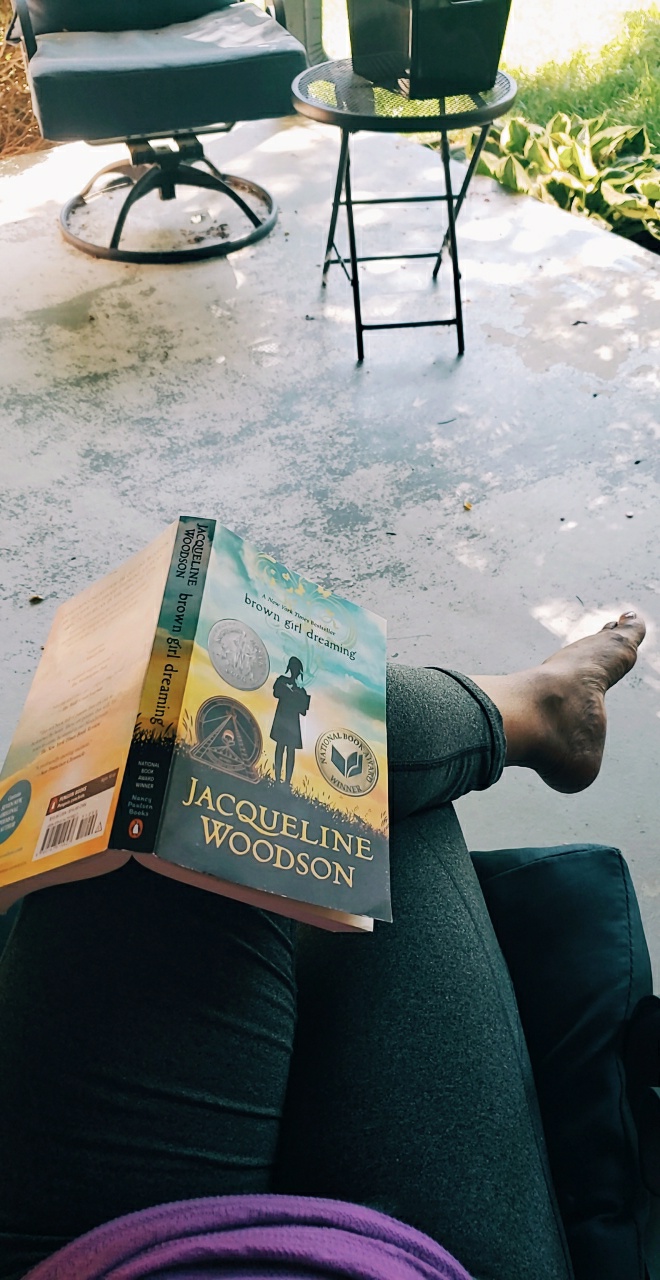
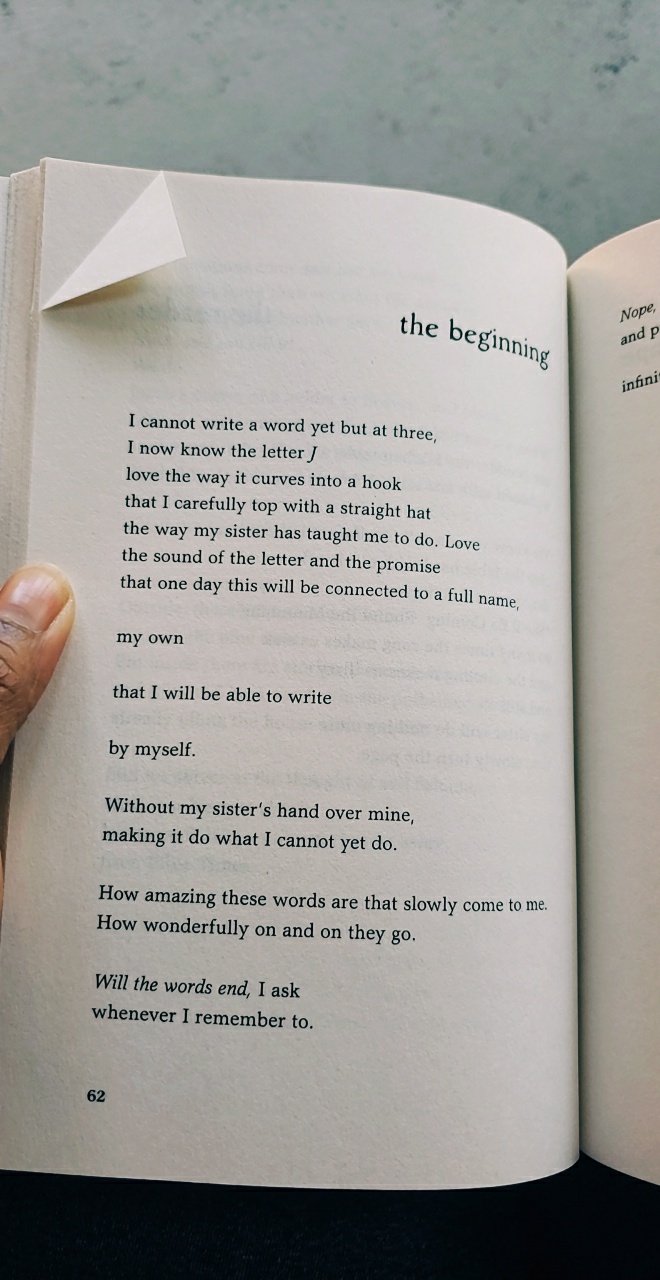
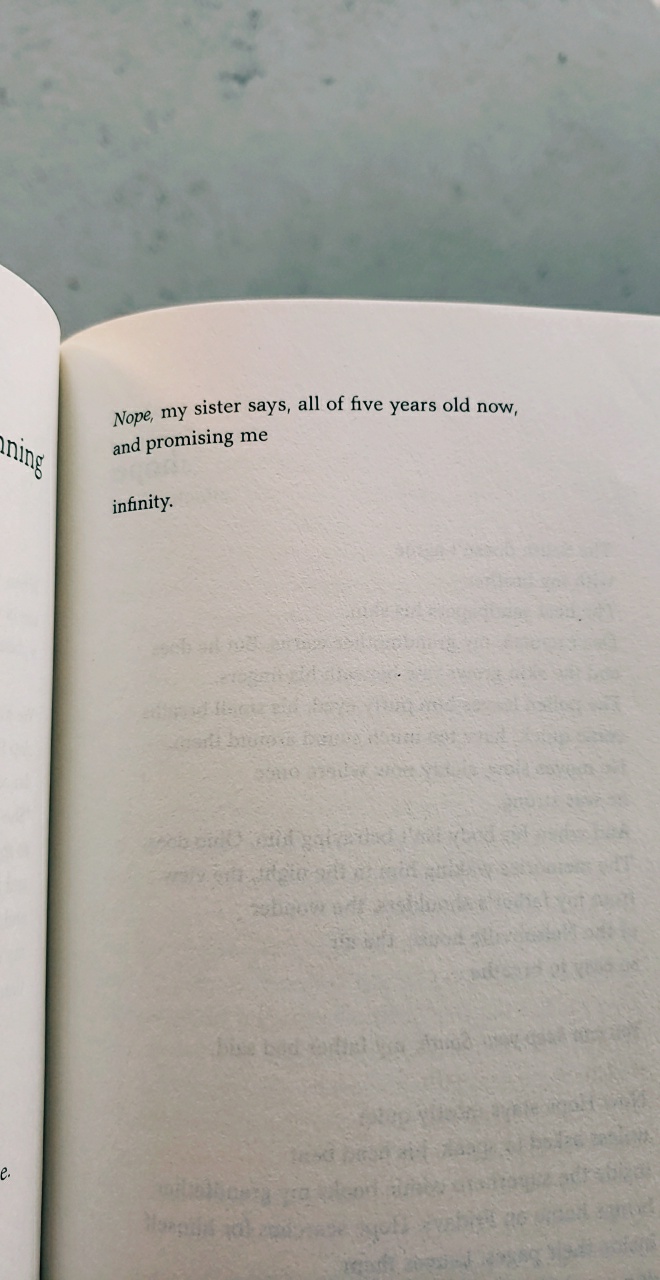
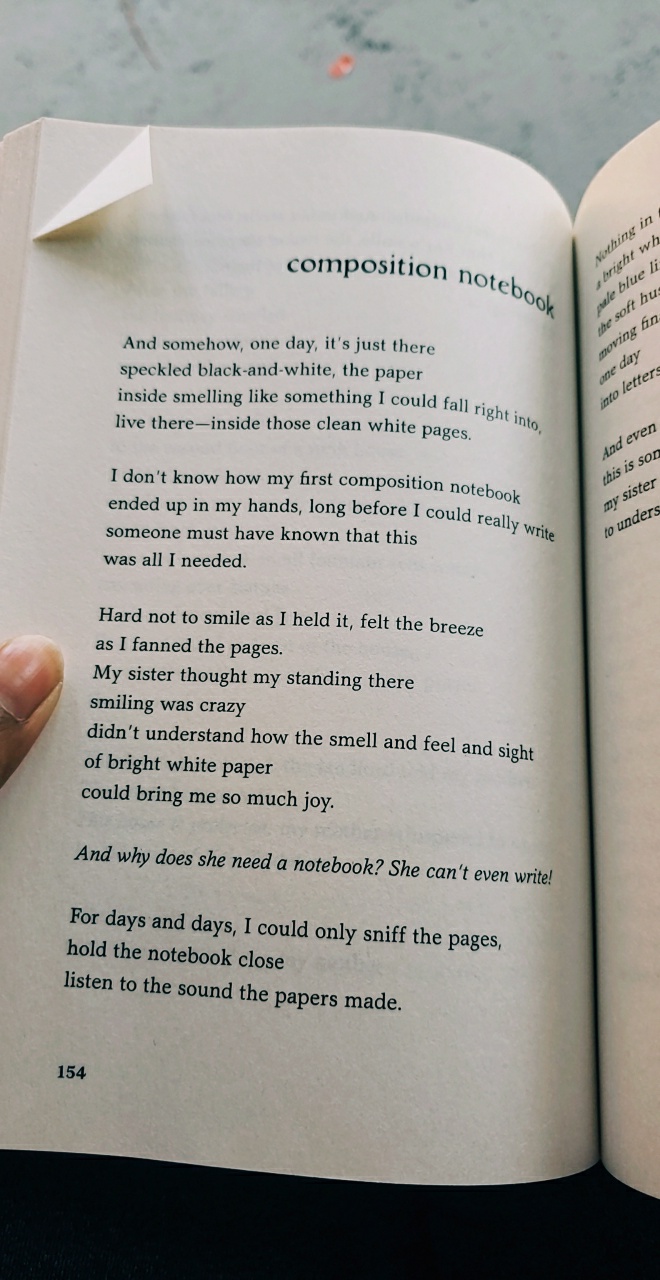
This morning, I sat on my front porch in an unseasonably cool breeze and set myself to the task of continuing to read through books for our new curriculum adoption. One of said books is Jacqueline Woodson’s memoir-in-verse Brown Girl Dreaming. As I read her fluidly-beautiful narrative set in chronological poems, two in particular stood out to me: “The Beginning” and “Composition Notebook”. These chapters capture so beautifully exactly how I feel about words and writing. I do not recall the first notebook I received but I have a feeling that my reaction was much like hers, coupled with the desire to start writing right now!

My daughter has recently begun writing her first independent narrative story, appropriately a fan-fiction piece about one of her favorite cartoon shows. I cannot express my joy at watching her get excited to put her ideas down in writing. It is simply amazing to see her “creating art with words” as she put it today.

I have been writing for approximately 33 years — stories, poems, song lyrics, speeches, essays, and articles — and I hold it as one of my greatest talents and delights in life. Lately, however, writing has felt incredibly difficult. Not the words themselves, truly, but, as Rachel Macy Stafford so succinctly stated the other day, “it’s hard to publish words in the world right now”. I want to write to help and heal, to be authentic and open, to welcome those who might need something deeper in a world full of quick quips that lodge in our brains and hearts like darts. But I am unsure of how to do so or what to say when I am struggling so deeply with feeling existentially exhausted myself.

I am trying but so often feel as though my trying isn’t enough. These chapters of Woodson’s book, however, feel like a tug on my heart, reminding me of what I love (to write) and why I love to do it (because it might mean something, somewhere, to someone). I want to embrace the infinity of words, “how wonderfully on and on they go” (62). Even if it is not perfect (or what I think is perfect), even if it feels too open, too honest, it might be just what some other soul needs in that moment. If only I am but brave enough to set that offering of words down to be what it will be.

So today I share these words that gave life to me today with you, dear ones.

Advent 2021: The Light of Hope


It seemed impossible to fathom that 2021 could be harder than 2020 in any way and yet…it is easy to see that it has surpassed all those non-expectations. In many ways, 2021 has proven indelibly harder on our hearts, minds, and bodies than the previous year. In that difficulty, hope has often seemed to wane. As we enter this season of Advent, of preparation and arrival, let us not allow despair and difficulty to rob us of that most blessed gift: hope. 

Hope is an everyday treasure. In Neil Gaiman’s famous series The Sandman, two characters have a contest, a seemingly simple game but with dire stakes.  It is The Oldest Game, a game of imagination with each character trying to best the other, to come up with the Final Idea.

One character claims, “I am the dark, the end of everything. The end of universes, gods, worlds…of everything.” 

Into the bleakness they painted, Dream of the Endless replied…simply, powerfully:  “I am Hope.”  

To this there can be no reply, no defeat, no destruction because hope is everywhere to be found. In every heart and mind, in every space in life. As the poet Alexander Pope wrote, hope springs eternal. No matter how we suffer, how we hurt, or how little light can be seen, our eyes will always seek out and find it–even the merest pinprick of light in the darkness, the tiniest bit of hope to cling to.

“I am Hope,” is God’s gentle whisper to worn and weary hearts at this onset of Advent. As we begin this journey into the Christmas season, Hope is at our side. As we wend towards the end of 2021, sometimes with tremulous steps, Hope is under our arm, supporting us. Even the merest mustard seed of faith that things will get better and that God will show us the way lends strength and power to Hope. Hope is in a hand outstretched to help, in celebrating a hard task done, and even in the quickest of kind notes and gentle acknowledgements from our dear ones. Hope is in the bringing-together words of “Me, too. You aren’t alone.” 

Hope is what holds us aloft and all together. Hope in life, hope in God and His love, hope in His light. As the first Advent candle glows, may we find hope in its flame and in the Word it prepares us for.

Romans 15:13: “May the God of hope fill you with all joy and peace as you trust in him, so that you may overflow with hope by the power of the Holy Spirit.”

Advent 2020 ~ The Flicker of Hope’s Flame


2020 has barreled its way through our lives like so much of a stampede, seeming to batter and crush anything in its way. Our days have often been swathed in worry, upheaval, pain, and grief. We have spent this year living in the space between breaths.

We acknowledge the losses, the pain, the change, the struggles, and the sadness of this year. We take 2020 to heart because it has affected every corner of our lives.

But there is something else that we take to heart, Friends. In all of the struggle, in all of the hard, we take Hope to heart. We grasp the Hope that we now celebrate today. We grasp the Hope of Jesus’ Coming. We grasp the Hope furnished by His birth, His life, His death, and His rising again. We take to heart the Hope that is grown and nourished by His Love, His Joy, and His Peace.

We can take that Hope to our heart and soul. There may not be much or anything that we can do on a large scale to stem the tide of struggle seemingly inherent within this year, but we can do our best to live in Hope. We can do our best to live in Peace. We can love, hold, do good unto, and care for others, for those who surround us. We can forgive. We can give grace instead of sinking into bitterness and despair.

We can hold on to Hope.

The Rest After the Step


It has been a long few weeks that have left me far more tired than I had anticipated. The biggest factor in this is something that I have told very few people about. Two weeks ago, I applied for a position outside of teaching. My husband heard about the posting from some of the ladies who work for the nonprofit that posted it (benefit of your office building sharing space with other groups). He then immediately passed it on to me, with the insistent assurance that I would be perfect for the position with my abilities and skill sets. At first, I was dubious, as I have been in the past, but I have deeply prayed over the past few years for God to show me the next chapter He has for me, to help me find my next right thing (thank you, Emily P. Freeman and Queen Anna!). So I decided that I would update my CV and send it in with a letter of interest. You guys, I cannot count how many revisions those two documents went through over those few days! I have always been a perfectionist when it comes to documentation like that; and it had been several years since I had even contemplated a position outside of teaching, so updates were definitely needed. When all was said and done, I said a prayer, clicked “Send” on the email, and that was it. Then I had to wait. So I waited. And waited. Then, all in a rush, I received an email last weekend saying that they would like to interview me over Zoom! We managed to wrangle a day and time that would work for everyone, mindful of time differences for those traveling, and so it went.

The interview went well, but, in the end, it turned out that the timing of the position just was not going to work out. They needed someone to be able to train and slide into the full-time position by the end of February, and I did not have peace about up and leaving my teaching position so suddenly and abruptly. I did not feel released to do that to my principal and students. So…needless to say, when they answered my question about the timing, I felt a sinking in my soul.

“Well, that means this interview is over,” I thought. But I still asked some questions about their nonprofit, in an effort to not have things end on an *extremely* awkward note. Just a moderately awkward one.

After the interview, I finished out my day, but, once the kiddo was in bed and Ben and I were alone, I flopped onto the floor with an “UGH!” that would have made Charlie Brown proud. When I was finally able to verbalize what I felt, I realized that I had become far more hopeful of that new position, that change, that new chapter, than I had realized. And I was disappointed. Disappointed that it wouldn’t work. Disappointed that I wouldn’t get to try something new. Disappointed that my stepping out in faith seemingly wouldn’t be rewarded.

As this week has gone on, however, I find a thought has been whispered to my mind and soul and repeated when I haven’t been looking.

“You have stepped. Now rest.”

Rest. It’s my word, my intention for the year. Rest. I stepped out in faith, praying for God to lead me aright. And He did. I stepped out in courage. Now I need to rest. 

Rest in gratitude that God kept His word to be with me and guide me. 

Rest in faith that He knows best. 

Rest in peace that where I am is my next right thing for now.

Rest in hope that, when another opportunity comes along, I will heed the call to step out again.

I have stepped; it was a lot of work–mentally, emotionally, and spiritually. Now it is time for me to rest my feet, recover, and allow Him to refill those stores. There is another big week ahead, but, for now, this is my immediate next right thing. I even have a scratchy, tired voice to enforce it.

Rest.

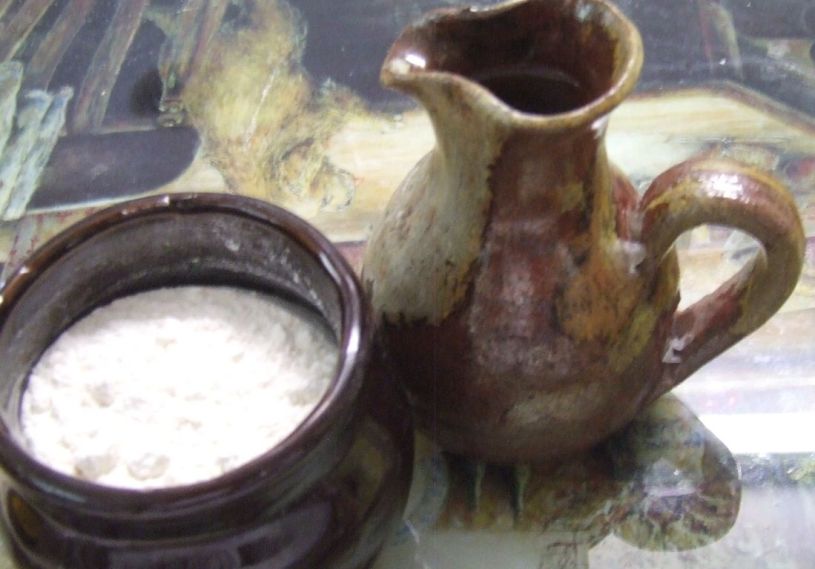
Meal and Oil


I do not often like to write about the hard stuff when I am in the middle of it. I feel too close, too rattled, too raw. But, often, that is when I am at my most honest, just as I am sure it is for you. Part of the work of Christmas within me, I believe, is that very honesty. I am apt, often, to sweep my own difficulty under the rug, or at least shove it out of sight. But that isn’t truthful, honest, and I want to be honest.

These past month has been stressful, as in ridiculously stressful; stressful enough to throw off my body’s clock and rhythms. I won’t downplay how it has felt. I have collapsed into weeping several times—on my classroom floor, in my car in the grocery store parking lot, on the phone with my husband after a failed trip to the BMV.

Alone in those moments, I cried out to God. I begged and pleaded, “I need a miracle!” I wanted to ask God to make it all better. I just wanted a new car to show up in my driveway (or at least one without a myriad of problems that need constant fixing) or for a windfall of money to solve all the issues. Instead, though, a completely different thought floated into my mind and out my mouth.

“Please, God, be my meal and oil.”

Meal and oil? Where did that come from?

In the Old Testament story of Elijah, it tells of his experience staying with a widow and her child. When Elijah asked her for some water to drink and bread to eat, she warned him that she only had a little meal (flour) and oil left. Enough to make a small cake for herself and her son, and then they were going to wait to die. But she took the little that she had and began to cook. In the end, she fed God’s prophet and herself and her son with it! Lo and behold, the next day, there was more! Not much more but enough more.

I have not thought about that particular Bible story in many years, but I remember being struck by it even as a child. So I have found myself repeatedly praying for God to be my meal and oil—to hold our cars together just one more day, to give me enough grace to deal with my students today.

Sometimes, day by day is what I need. I know me: I would look ahead into a year’s worth of tomorrows if I could, just to make sure everything would indeed work out. Not necessarily as I hope but just work out at all. So, for now, perhaps this is the best for me, the best that I can do: expect the best that God can do. Expect him to give me what I need daily, as I learned to pray as a kid. “Give us this day our daily bread…”

Dear God, please be my meal and oil today.

Being Honest About What is Broken


Several Sundays ago, I heard a sermon that struck something inside me. The thoughts it brought up keep repeating over and over in my mind, and you know me. When that happens, it’s a large clue that whatever I am thinking needs saying. As it stands, it has taken me a while to get to the “saying it” point, as is evidenced by the fact that I am posting this several weeks on.

In the ancient Israel of the prophet Nehemiah’s time, Jerusalem was conquered, razed, the Temple destroyed, and the Israelites taken off into slavery. After decades in Babylon, some of them were then allowed to return to Jerusalem. However, the walls of the city remained broken down and destroyed for a long time. As the pastor giving the sermon analyzed, broken-down walls meant disgrace, defeat, and judgement, a lack of protection, and were a constant reminder of when everything went horribly wrong. In Nehemiah’s time, according to the pastor, the surrounding countries had “no respect for God or His people” and come against and conquered them because God’s people did not live up to His requirements, had set aside their faith, and ignored His messengers (2 Chronicles 36). The Israelites lived in exile for decades before being allowed to return home to rebuild their city and their Temple.

That idea about the countries surrounding Israel having no respect for God or His people stuck with me, or, more accurately, a reason behind it stuck with me. In our current day in 2019, what I have seen, heard, and what has coalesced in realization is that people outside of Christianity often have no respect or love for God or His people because His people have no love or respect for those outside. And that thought was a gut-strike, keeping itself on repeat in my mind throughout the remainder of the service.

People often “do not love and respect God” or the people who claim to be His, because the latter do not love and respect those outside their own echo chambers, or ostensibly even those inside at times. In the past several months, we have seen new holes open up in the proverbial coat of several areas of the Christian church institution. We have once again had light shone on secrets and dark corners in trusted, cherished parishes that have caused incalculable pain, damage, and life-altering trauma. At the same moment, in almost the same breath, when Christlike love and presence were needed most, in another denomination a decision made by a few was reinforced to ostracize the many, an entire community of people, and to deny them a place in that faith and, presumably by extension, in God’s love. While I have watched the beauty of Methodist churches rising up and standing in solidarity and love with their people–all of them–the reality must still be faced. Christians have—in a few very loud corners—with their tongues proclaimed to love the Lord their God with all their hearts, souls, minds, and strength, and that they love their neighbors as themselves. Meanwhile, with their hands, they have betrayed those words and crushed them into sand that ends up blown into the eyes of those whom they have denied.

Does that come across as harsh? Maybe it does. Maybe it needs to.

I have written on this before, so it really should come as no surprise where I fall in this discussion of love, faith, and inclusion. Is it every single Christian who is guilty of this? No. By no means, no. But there are, unfortunately, enough to make a very crucial difference in the impact of our faith and the weight by which we are measured. The very last part of the sermon that Sunday hit me, this time right in the heart. It was a challenge to the congregation to “work together to bring glory to God and blessing to those who dwell in Him”. The pastor said four things that have stayed with me:

1. Do not ignore the needs in our community or in our church! Be honest about what is broken.

2. Don’t wait for someone else to get involved. Go for it!

3. Use what you have, and trust God for what you don’t have!

4. It is okay to expect a miracle, but it is not okay to wait for one.

These four admonishments may seem simple on their faces, but they are heavy with truth, Dear Ones. The one that has lodged its razor-sharp corner in my heart is “Be honest about what is broken”.

Our lack of love as Christians is broken.

Our lack of understanding is broken.

Our lack of humaneness is broken.

Our lack of mercy is broken.

Our lack of Christlikeness is broken.

Our denial, our erasure, these things are all broken.

We are broken, just as others are broken. Broken and in need. Why do we as Christians try to deny the love and open arms of God to someone else (as if we could!) when we are in such desperate need of them ourselves? Newsflash: God doesn’t need our permission to love someone. His love is not predicated on what we as fallible humans think. Again: God. Does not. Need. Our. Permission. To. Love. Someone. As Christians, we are not the gatekeepers to God’s love. We are supposed to be the instruments of it, but our actions, words, and attitudes can actively destroy the chance for that relationship to be born. We can actually get in the way of the love we claim to espouse.

Be honest about what’s broken. It seems a simple and difficult enough idea at the same time, doesn’t it? In these weeks, I have been faced with what might appear to others to be a simple choice: to post or not to post, to share or not to share. I am trying to pull all of this thinking into words and then be brave enough to “say” it out loud. I have posted a few things lately on social media pertaining to the LGBTQIA+ community and my Christian faith that I personally feel deeply and strongly about, as I have in the past. These are beliefs, statements, and stances that I know that some Christians in my life would, most likely, deeply disagree with. That alone has caused me a bit of anxiety. But, at the same time, I had a heart-nudge (which I have come to recognize as God’s prodding and actively try not to ignore), and I wanted to be true to my conscience, my faith, and my convictions.

Over the past few weeks and days, my heart has broken repeatedly. As a teacher, I look back and think of students that have sat in my classrooms over the past ten years, who have written of abuse they have suffered, of loneliness, isolation, self-hate, and fear, and the resulting trauma and self-harm. Students whom I have known to be or suspected were non-hetero, non-binary, etc., and the struggles they have battled through. I cannot fathom telling these beautiful, deep-hearted children that they are a mistake, that God doesn’t love them, doesn’t value them, or that they don’t have a place in their faith if they feel called to serve in that capacity. I cannot wrap my mind or heart around it. Not when the people I have been privileged to meet, know, love, and who have been formative in this, the second half of my life, are so broad and deep and wide and who span the entire spectrum. People whose light and love and faith have supported and walked with me through hard moments and times. Tender people who have unclenched my fists and held my trembling hands in theirs, both literally and figuratively. Beloved people who have treated me with kindness, mercy, humanity, and understanding beyond anything I could have hoped for.

President of Biola University, Barry H. Corey, recounts the day when a friend and colleague in Bangladesh took him out to lunch and then proceeded to tell him about her homosexual relationship and the partner waiting for her back in the States. He asked her why she was telling him as he was “obviously straight […] and neither a trained counselor nor LGBT ally” (Love Kindness, 60). Karen replied that she had told him “because she believed authentic Christians see people first and foremost as created in God’s image and of immense value” (60-61, emphasis mine).

So many people in the LGBTQIA+ community, both young and older, have been told, both directly and indirectly, that they are “less than” (less than desirable, less than acceptable), having any identity as God’s or being created in His image wiped away because they are “unworthy” or “wrong”. As a result, so many of them leave and never darken the door to a community of faith again because…well…who would want to? In this, I believe that the Christian church is broken. We fail to see God’s image in those different from us and therefore miss the deep value He has placed in them.

In For the Love: Fighting for Grace in a World of Impossible Standards, author Jen Hatmaker unpacks this idea with open honesty:

We [Christians] are losing influence in our culture, and it isn’t even a mystery as to why. Folks are explaining plainly why they are leaving faith or are too afraid to come near it. One of the chief reasons is this: Christians.

I realize the mass exodus is multifaceted and deserves a fair analysis, but the common denominator is so abundant, we have to face it. [Cultural] conversions are happening inside and outside of Christianity and are necessary to assess and understand. But treating each other poorly is not a factor Christians can pass off.

[…] This is the next generation weeping for their gay friends and classmates, rejecting the church that maligns an entire community. This is my smart and funny friend who lives in loneliness because her Christian “friends” wounded and shamed her, and she is afraid to try again.

[…] If we are inhibiting others from finding Jesus [through our behavior] this constitutes a full-blown crisis. Ultimately, the rejection of Christians predicates the rejection of Jesus, and if that doesn’t grieve us, we have missed the whole point. Jesus tried to impress this upon us. I mean, He was obsessed.

“By this everyone will know you are my disciples, if you love one another” (John 13:35).” (190-192, brackets mine)

Something that Hatmaker reminds her readers of is that there absolutely is a correlation that can be drawn between how we as Christians treat each other and our fellow human beings and how the world that is watching us will feel about Jesus. If we say we are all about love and mercy and kindness and yet we condemn, decry, and dehumanize, how can people be anything but confused, hurt, and angry? The links between our belief, our words, and our actions are woefully broken, leaving us as Christians with a reality to face.

Our lack of love is broken.

Our lack of understanding is broken.

Our lack of humanness is broken.

Our lack of mercy is broken.

Our lack of Christlikeness is broken.

I am not waiting for a miracle. I am expecting one, yes, but I am not waiting for one. Our generation cannot afford that, and neither can the next one. I will love. I will be kind. I will pray. I will encourage. I will use what I have—my presence, my influence, my voice, my words, my arms—and trust God for the rest. I will tell my students that they are welcome in my classroom and in our school community just as they are. I will remind my friends and family—daily if need be—that I love them and thank God for them. I will do my best to speak out against injustice and call those in power to account. I will commiserate with, support, and comfort those who are suffering. I will do my best to live what I believe and write. We belong to one another, and that is how I choose to live.

“Above all, I desire to be part of God’s image-bearing people who relate to each other full of grace and truth, the same way God relates to us through Christ. Loving those who are different than we are is what we are supposed to do. And we’re called to serve together, to eat together, to have long and meaningful conversations with each other, to listen to each other, to sit on pews beside each other. […] I am working on the kindness of listening, understanding more and more the difference between listening while waiting to respond to someone and listening while wanting to learn about someone. Kindness is the latter.” (Corey 63-64, emphasis mine)

I am expecting a miracle, yes. I am not waiting for one, no. Love, listening, kindness, connection. These are the miracles I choose.
The Adjustment Paradox


Author’s Note: It took me a bit to pull my thoughts together on this, and I thank you for your patience, dear ones, and appreciate your continued prayers.

This summer has been all about adjustment. Adjusting plans, procedures, routines, responsibilities, and timing. My motto as a teacher has always been “Adaptation & Improvisation”. But you know what? Adjustment is exhausting, utterly so. Making plans and then have to adapt them or scrap them entirely and start over, that constant re-doing in order to make things turn out the way they should can completely drain you or drive you mad (whichever comes first). At the very least, it’s frustrating “making it all fit”. But how often might all that adjustment be obscuring something important?

I am the queen of making it all fit. I am the one who Tetrises the schedule, the budget, the house, the fridge. I am the one who figures how to make everything balance and work, how to make our world fit together to the best of my ability. But, at times, I catch myself wondering: just how much of that does God have to do for me? Does He end up having to arrange/re-arrange things in my world to help guide me through certain situations or toward a best outcome? While I know that it is perfectly within God’s scope and sphere to do so (and that I am positive He has done so in the past), it is still quite a surreal thought to consider that the Creator of the Universe might tut and sigh when He sees me turning the wrong way down the path of life and then start re-arranging His plans for me, much as I might re-arrange my driving routine to get around construction and to home. And yet, I could probably point out several poignant places in my life where I am fairly certain some adjustments had to be made by God because this stubborn child of His decided to skew off into left field.

How often do I let myself become so riddled with anxiety and stress due to an adjustment that I miss what’s right in front of me? An answer or a pathway so lovingly-provided? Or I get so anxious about an adjustment that I actively shy away from or unwittingly sabotage a chance, change, or opportunity because of the adjustment that would come along with it? I am so thankful that God is not exhausted by adjustments, by adaptations, by me, because let’s be honest: I am exhausted by me most days. I am in a season of adjustment right now but also a season of waiting, which is a very strange place to be as I am having to adapt and adjust life and yet not seeing what I would probably call any kind of change on the horizon. Then again that’s why we call it faith: the hope of things not yet seen.

I have things that God has put on my heart, prayers and hopes that I am not even close to understanding yet, that I am holding loosely in my hands and holding out before Him every day. I do not know what God has planned for me in the days, weeks, and months to come, but I do know that He has not failed me yet. That promise I will not hold loosely; that promise I am going to cling to. How could I do anything less?