In the Letting Go


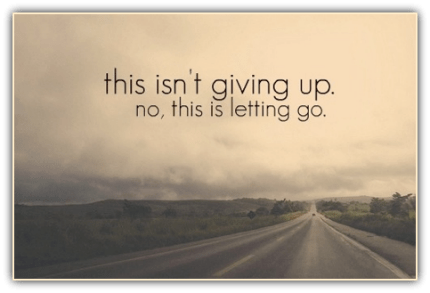
Letting go. People talk about letting go all the time, its need and necessity to mental and emotional health. It is a definite truth for me that I sometimes fight so hard for relationships/friendships because, to me, letting go feels suspiciously like giving up. And I don’t like to give up. Giving up is being defeated. Giving up is having failed. I don’t like to give up.

I believe that human beings are built for relationship as part of growth and maturation and support through life. Relationships, friendships, these are important, with meaning and ties and implications. Growing apart is one thing that does happen, yes. But, in my mind, giving up is an entirely different thing and not something that is strong in my repertoire. However, I am learning an important lesson (I say “learning” because I am still very much in process). Letting go is not about giving up. Letting go can mean a myriad of things. A few of those could be:

This is not good for me/my soul.

This is not good for them/their soul.

I need to make a choice.

I need to let them make their choice.

I need to live in the present and not the past.

This is my life, not theirs.

It is their life, not mine.

I need to live my life, not theirs.

This list is by no means exhaustive, of course, but it represents what I have run across and considered in my own processing and experience. Sometimes letting go is a quick cut, an immediate severing brought on by extreme situations and circumstances. I’ve been there. Sometimes letting go is a slow process, the last step and sometimes the absolute hardest one. I’ve been there, too. Letting go is moving past (even if just past) the hurt, the anger, and the bitterness and acknowledging that you still have a life. You still have family, friends, and loved ones, hobbies and talents, happinesses and joys, growth and change and renewal, a hope and a future.

And so do they.

It still doesn’t mean that letting go is easy. As I said, it can be the last and hardest step in a process.

We have recently been introduced to the concept of toxic relationships and people. Toxic as in “not abusive per say, but [that is] in some form or another bad for us. Limiting. Unhealthy – even if that lack of health is innocent (Priebe)”. There are times when, despite effort from one or even both sides, relationships or friendships do not work, no matter how badly we would like the contrary to be true.

One of the hardest lessons we may ever have to learn is that sometimes, the best way to love someone we love is from a distance. That no matter how much we want them to thrive and expand and be happy, we will never be the people who facilitate that expansion.

And that’s okay. (Heidi Priebe)

This quote is both striking (intellectually and emotionally) and incredibly apt. I think that we have often come to equate a separation, a need to let go and move on, with a lack of love or care. It really couldn’t be further from the truth at times. It is entirely possible to love someone deeply, want every good and happiness for them, but know that your active presence in their life doesn’t serve that wish, or theirs in your life serve it for you.

We [may] prioritize things as X, Y, Z, not realizing that our friends or our partners or our loved ones prioritize them as Y, Z, X. And our relationship spirals into toxic territory without us even realizing it. […] The truth is, you can love someone with 100% of your whole heart and still be toxic to them. You can care for them and still be toxic. You can want what’s best for them so badly that it tears you apart, and still have a negative impact on their life for the sole purpose of your two elements combine to form an inexplicably toxic reaction. Neither of you are to blame. But the result is what it is (Priebe).

When the realization does come, it does not necessarily make it any less difficult emotionally but it really is a healthy realization. Sometimes, there can middle ground found, communication made, rifts repaired, and toxicity dissipated. Sometimes not. Sometimes, the best thing is to let go, to walk away. Not stomp, or rage, or huff, or fire shots across the bow as we do. But step back, wish them all the good, and walk away.

Life does not end in the walking away. Let me say that again. Life does not end in the walking away. In the letting go.

You can still wish them every good and happiness. You can still care deeply, even beyond your own understanding. But you can let go. And you can move on. Your life will continue.

And it will be okay. No, it will be better than okay. It will be good.


Endnotes:

Priebe, Heidi.   http://thoughtcatalog.com/heidi-priebe/2015/12/547554/, 1/3/2016.
Missing the Walk


Today is a day for missing. As I walked out, in mid-February, into a day that is bright and sunny and breezy warm, warm enough to eventually shed my light hoodie, I found myself just walking around the playground while my toddler played. The sun warmed cheeks, neck, and arms, and I found my heart yearning and longing, deeply nostalgic. I texted to a friend, “Today would be a great day to walk. I am missing that today: just walking and talking with friends.” And I am. I am missing it terribly.

I miss the days walking through the neighborhoods just north (I think) of my apartment on UofE’s campus, my friend Leah and I just pouring out hearts and minds because we knew the other would listen, hear, love, and pray.

I miss walking through campus of an evening, sitting out on the Circle, laughing with my friends and listening to our echoes.

I miss quiet Sunday mornings walking through campus to church at BSU, the world still sleepy, quiet, and expectant of the day.

I miss nights being walked back to my graduate dorm by my husband-then-boyfriend, only to find out that he had left his car on the absolute opposite side of campus and neglected to tell me so he could spend that last bit of time with me.

I miss those first days of spring, those days when you can’t help but be outside. Walking barefoot and talking with friends about anything and everything, spectating ultimate frisbee games, napping on stone benches. Eating in little cafes, walking around malls, visiting comic and game stores, sitting outside at the coffee shop.

I miss being able to call up a friend to ask, “Want to walk?” and usually finding at least one person who would.

Oh, the miles that I must have trekked, the states’ worth of distance covered in those walks. But the distance didn’t matter. It was the time. Time I got to spend with people, being challenged and sharpened by them, gaining insight with them, learning them, learning to love them, and letting them see me more and more. The honesty, the vulnerability, the truth that I found myself sharing with people in those moments; that is precious to me. The spontaneous games of tag and footraces. The laughs that broke from me when I was caught and, usually, hoisted over a shoulder or grabbed up in a hug.

I feel like Rapunzel sometimes. You know, living far away from anywhere and anyone? I miss an arm around my shoulder or an elbow linked through mine as we go along. I always knew I could reach out and find support. Find a friend.

I still know that, and I still reach, even if the walks have lessened and the distance has widened. But I am just missing the walks today.

Some Truth for a Tuesday


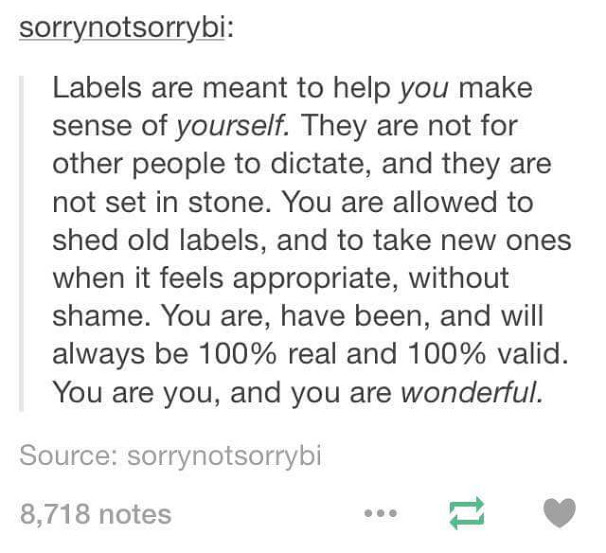
A friend sent me this last night and it absolutely hit the necessary heart-spot. And so I am setting it here for you today. You are allowed to change, to grow, to be who you are becoming. You are all kinds of wonderful and I am glad that you are here.

2016-01-18

Giving As You Would Have Given To You


We have often heard what is touted as The Golden Rule: “Do to others as you would have them do to you” (Luke 6:31). Have you ever thought, though, that that includes not only our actions but our reactions to people, too? Have you ever had a situation in which you longed and hoped for the best-case reaction from someone(s) but, instead, got the absolute opposite?

  • Instead of compassion, you were judged.
  • Instead of mercy and forgiveness, you were rejected.
  • Instead of support, you were abandoned.

Being truthful, coming clean, sharing our faults, shortcomings, vulnerabilities, or our need for help are often very difficult and even frightening. That fear is often built on the anticipation of a bad reaction from those to whom we must tell these things, and many of us have felt the pain of those fears realized at one time or another.

One of the most popular quotes over the past year (with over 51 million Google results and numerous memes floating about Facebook, Instagram, and Twitter) is: “Be the person you needed when you were younger” (Ayesha A. Siddiqi). What would our world be like if we gave the reactions that we wished we had received in our difficult moments? Better yet, what if we gave responses instead of reactions? “To react” is defined by Merriam-Webster as action or feeling as a result of a stimulus or situation. “To respond” is defined by the same as giving an answer to something. The former implies a visceral outcome, built on emotion. The latter implies conscious effort and thought given before speaking or acting. Now, that is not say that ours will always be the response that the other person would expressly desire but, in taking time to think, there is less chance of us allowing our emotions to hold sway and cause us to be discourteous, dismissive of, or even cruel to others in their heavy moments.

What if we gave responses instead of reactions? What if we took the time to consider? To consider humanity, fallibility, and kindness.  We can give compassion instead of judgement, mercy instead of rejection, and support instead of abandonment. How much better would our world be if we remembered the responses that we needed in our tough times and then gifted those responses to others? How many spirits might be spared, hearts edified, or even  relationships saved? Taking a pause is not always easy to remember or to do but I dare say that it undoubtedly worth it.

507b85fabb07efe9dd07e69ea3fb1ee9

NaBloPoMo Day 17: The Fiction of Relationships


Author’s Note: Edited, revised, and updated on 11-18-2015. That first draft was quite rough. Thank you for wading through this all with me.

I am an avid roleplayer. I have been roleplaying — tabletop and larp — for the past ten years. Nowadays, my gaming is largely restricted to online forum games but that is still fun as it affords me a writing outlet. There is one that I have been in for the past almost-five years: a Hero System-based X-men rpg entitled “Legacy” where the children of superheroes from both the Marvel and DC universes come together at Xavier’s School for the Gifted to learn to manage their abilities, use them wisely, and, yes, become heroes. I play a young “muggle-born” (in other words, her parents aren’t named superheroes) mutant named Elizabeth Martin and I have played her from an in-character age of fourteen to almost seventeen. And, yes, Zoe Saldana is my character model. Over the past few days, I have found myself reading back through the first scenes, the beginnings of her story years ago. There are 32 pages of bookmarked scenes on my account, ones I have participated in as well as others that concerned her or characters to whom she was tightly bound. And one thing that has always struck me about her is her relationships with other characters, friendly and otherwise.

Betsy has perhaps had the most romantic entanglements of any female character in the game, each of them unique in their own situations and ways. Roleplay like this is an incredibly organic form of writing for me, where my character can change, grow, and surprise me based on her interactions with other characters, plot, and situations within the game. I am able to be startled, surprised, horrified, elated by the things that Betsy does and chooses, how she falls and grows. I have been re-reading and, therefore re-living, some of her romantic relationships and I have happened upon some key differences between them that have struck and clarified some things for me as her writer.

Continue reading

Who Is the Outsider?


I recently started watching the new “Hawaii Five-0” television series from the beginning and one of the words that shows up frequently, especially in relation to Detective Danny “Danno” Williams, is “haole”. “Haole” is the Hawaiian word for “outsider”, and, honestly, it makes me bristle a bit to hear it sometimes, just like it does Danno. So many movies and stories are predicated on the plot of the outsider making good, finding common ground, and becoming part of his surroundings/community. So many languages have a word for outsider – gadjo, gaijin, haole, jackeen, msungu, for example. It makes me think. It makes me wonder.

Have I ever been seen as the outsider?

I know that I have seen myself that way before and it served to make me afraid and worried about doing well and thriving in a new community. When I first arrived at graduate school is a prime example of this, and it took a great deal of encouragement and love from friends and family far away and a fair amount of courage on my part to overcome it. But I do wonder if anyone else has ever seen me as an outsider.

Admitting new people into our lives and into our social circles is a part of life, though not always easy. Learning to share our friends, our family, the people whom we have seen as ours one way or another, can be incredibly difficult, but it opens us up to chances at new friendships, new relationships, which are pretty scary in their own right. I’ve stepped out and gotten to know people, admitted them into my life, into my circle, and sometimes it has worked out wonderfully, and sometimes it hasn’t. That’s life. I will admit, however, to having thoughts of “hey, they are mine” when I have seen friends make friends and hang out with new people, and that is where I have to stop, take stock, and remind myself that these people have done nothing wrong to me, neither set. Also, everyone deserves and needs friends and that, above all things, I want my friends, the dear ones in my life, to be happy. So while there may indeed be people who are ‘outsiders’ to my life, I often have to remind myself that they do not deserve to be thought of or treated so. I needed people to accept me and all the connections that I would make throughout my life that would also weave through theirs, so I can owe someone else nothing less than that same acceptance. Even if we never become ‘insiders’ to each other’s lives, I don’t want to see or think of them as an outsider. It would set us at odds and that can weigh heavily on the mind and soul.

But it still prods me to wonder, to even ask the question: have you ever seen me as an outsider?

Crucial Conversations


“There are moments of disproportionate influence, moments where how someone behaves has an enormous effect on every result they care about.” – Joseph Grenny, co-author of Crucial Conversations

Let’s be blunt here: crucial conversations are hard, very hard. “When it matters most, we often tend to do our worst.” This has been a large struggle for me in my lifetime. When I sit down face-to-face with someone to have a crucial conversation, it can sometimes be difficult for me to keep my emotions in check and that can derail a conversation quickly. I often fare better in having written conversations because I am able to write out my thoughts and see what I am going to say BEFORE I open my metaphoric mouth. But that is not always an option, nor what is best for the other person or the conversation.

As a child, at some point, I bought wholesale into the myth that you have to choose between telling the truth and keeping a friend/relationship. It has been and continues to be a struggle for me to choose truth when I know that it could possibly cause difficulty in my friendships and relationships. I know that honesty can birth incredible intimacy, deeper bonds, and sharpening relationships, and I have definitely experienced that, thank God! But we all face those situations where we can fear those crucial conversations. I have had quite a few of them over the past several years, and I have been able to see a change in my strength in those conversations. I am still in process, yes, but I have been able to have some crucial conversations, be honest and respectful throughout, and I think that it worked to good effect on both sides.

One of my biggest fears/worries is what people will think of me, if I am being totally honest. One of the statements that Joseph Grenny makes, in his book and in his public speaking, is this: “People never become defensive about what you are saying. They become defensive because of why they think you are saying it.” My mind is such that I catch myself worrying about what other people possibly think of me or my motivations, imagining their thoughts or what they might say to others of me. I try to make sure that people know my intent for a conversation but it is hard even then at times. I want to be able to create a sense of safety so that I can have these crucial conversations. But how? How can I create that sense of safety if there has been any emotion/pain/misunderstanding between myself and others in the past? Or if I have already attempted to create that safety, that mutual purpose and respect, in other ways with what seems to have been minimal effect? That deeply discourages me from conversation, to be frank. If previous attempts at fostering safety haven’t seemed to work, how can I put myself out even more for a conversation that may not even be desired? When do I stop being someone who is trying and become just a nuisance? These are the questions that I am asking myself as I continue to try to work and grow through this process we call life, which no one can fully prepare you for.

Crucial conversations are hard and, in my particular case, they are a lifelong process.

NaBloPoMo 2014 Day 15: Touchy-Feely


tumblr_inline_mm7ukln1fk1qz4rgp

Hi! I’m Mel and I like warm hugs! And squeezes. And being lifted off my feet. Oh, and I love cuddles and snuggles, and having my hair stroked, and my shoulders rubbed, and my back scratched, and my feet massaged. Honestly, I just like physical affection and touch. There are times and situations when I don’t wish to be touched, yes. But more often than not, if I am comfortable with you, I’m happy to give and receive physical affection. A hug is my go-to for comfort, gripping someone’s arm or hand my way of showing support, stroking their hair a playful gesture.

Honestly, the fact that I am “touchy-feely” (I do believe that is the technical term) at all still comes as a bit of a surprise to me. My family on the whole is not very touchy-feely, unless it was the moms with their own children. My friends and I weren’t very touchy, unless we were doing each other’s hair. In fact, hugging between us girls didn’t really even come into being until we were in high school and, even then, I wasn’t much of one to express my affection physically. It wasn’t until I got into college that I connected with the side of me that likes to give and receive physical affection. It was mainly with my female friends, of course, but I also learned not to be afraid of hugging my male friends either. Several thousand miles and a whole country away from home, the caring hugs and hair-strokes of my friends became a supreme comfort to me in times when my heart was low. An arm thrown around my shoulders during a walk produced a smile. A hand slipping into mine amidst difficult words gave me strength.

Some of my happiest, most content times have been with those I care about. One of my best friends, my very first memory of her is of me standing behind her while she and my husband (then boyfriend) and some of their friends were playing a session “Changeling: The Dreaming” (a tabletop game). As I stood behind her and observed the game, I played with her hair. I remember these luxuriant, thick, silky red locks pouring through my fingers as I just enjoyed their weight. I remember asking her several times if it was OK for me to be touching her and she told me, yes, that she was enjoying it very much. Things like that I remember. I remember the way that people hug. Hugs are like fingerprints. I would dare say that there are several people I would know by their hugs alone. The way their arms feel, the way they squeeze me, the sound that rumbles in their chest when they do. Like loops and whorls and arches, each a unique mixture.

Today, my daughter stood up from having her diaper changed and leaned into me for a hug, which I happily gave. I held her a good long time, her head on my shoulder and my chin rested on hers, and I just breathed and marveled at the comfort that I received from such a little body and such a simple action as touch.

NaBloPoMo 2014 Day 2: The Weight of Silence


Break_The_Silence_by_shutteIn Much Ado About Nothing, William Shakespeare touts silence as “the perfectest herald of joy” (Act II, Scene 1). And I would agree. There are moments that strike us speechless, unable to find the words to express just how happy, ecstatic, or joyful we are. However, I would dare to pose that the opposite is also true. Silence can also be the fiercest vehicle of despair. Silence can fill our ears, stab at our hearts, and wound our very souls.

That conversation that is ignored.

The letter/text/email that is never answered.

The invitation that is never accepted or extended.

The relationship/friendship that is never tended to.

The prayers that never seem to be answered.

The dreams that aren’t acknowledged.

The questions that are never answered.

The efforts that are not acknowledged

These silences are sharp and painful, the type that slice past our defenses and heap stones inside our chests. Everyone has experienced it at one time and in one form or another, and I have yet to find someone who doesn’t consider it one of the worst feelings/experiences in the world. No doubt about it, though, sometimes silence is…well, it’s just easier. Isolation and silence can protect us, keep us safe from rejection by keeping us from reaching out and putting ourselves in a vulnerable place. Silencing our voice can prevent discord, disharmony, and confrontation. Silence keeps our secrets, our weaknesses, our pains, our hearts from being revealed, judged, compared, thought foolish, stupid, or even just from being disagreed with too vehemently.

Silence may feel safer, yes, but, in the other hand, it can be soul-crushing. Silence in response to our putting ourselves out there, to stepping out in faith, to the putting forth of effort in whatever situation it may be, can breed doubt, hurt, and far worse, if we let it. Silence can fill our minds with conjectures, our imaginings in place of the truth that we do not know and cannot expect to learn. Ofttimes, those thoughts, worries, and conjectures are far worse than what the truth might actually be, but those are the stones that are weighted into our chests and press on our hearts. Sometimes, though, silence is our cue to step back, to let go. But that can be just as difficult and heartbreaking. Letting go can feel suspiciously like giving up, which no one likes to admit to. I certainly don’t. But the other option is to give and reach until we give out or break.

I do not have a remedy for this. No magical words to make it better or easier. I haven’t figured anything out. Emotions and feelings cannot be cordoned off, magicked away, though they can be understood, commiserated, sympathized, and empathized with. Whether you choose to step forward or back is up to you. You may gain, or you may lose. Your way out of the silence is your way, no one else’s. I hope that you find it, and that it is good.

Windows to the Soul


Writer’s Write Prompt: Describe your love interest’s eyes without using a color.

They shimmer with thoughts and ideas innumerable, ringed with the desire to explore them. The pulse of emotion is there, tempered by sensitivity and patience. His eyes can be shuttered, unreadable, but still invite you to talk even as he chooses simply to listen. They can flash with rage but are then banked with resolution. When they glisten with heartbreak, one wants to decry the world for wringing tears from them. They are strong and softly veiled, open and deep as cave rivers. They may be windows, yes, or just the beginning of Alice’s rabbit hole.